Showing posts with label Myth of Choice. Show all posts

Friday, April 30, 2010

Know Your City Better, Look at it thru a Scientist's Eyes

It has always seemed to me that many defenders of sprawl, aren't really defending the actual everyday world that is defined by sprawl. Sometimes it stems from property rights (although any property owner NOT thinking about their neighbor is shooting themselves in the foot).

For others it is a misplaced anxiety about losing their home, their abode, the stuff they love inside the house. Rarely, do they really love what is outside the walls of their house. This is why home selling so often veered into pedaling improved niceties for the petty bourgeois: granite counter tops, a jacuzzi tub, a game room, etc. etc. All nice things sure. But, more often, in order to afford that place, the house ends up being constructed about as well as a bird's nest with paper, sticks, and spit. (Maybe THAT's what Herzog and DeMeuron were saying?)

But is life really better when you don't want to leave the house? When their is no amenity a few steps from the front door?

My guess is that the majority of sprawl defenders and attackers of "urbanism" are really those just afraid of change. Evolutionally (sic) speaking, these people have a purpose. They are wired to ensure that change has to prove itself. That we don't keep wandering down wrong roads and dead ends of false progress (see anything designed recently by Steven Holl).

With that, I bring up one of the first two rules of science:
Look at things right under your nose as if you've never seen them before, then proceed from there.
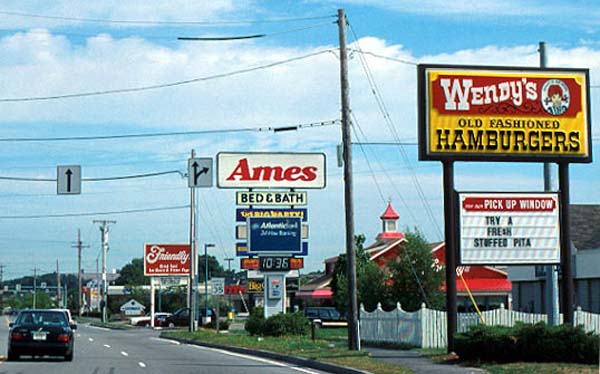
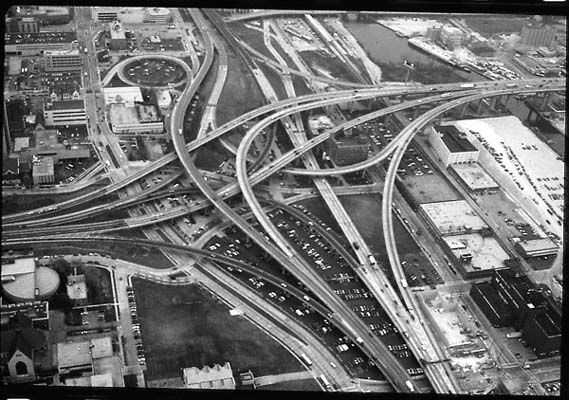
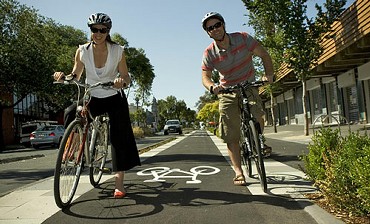
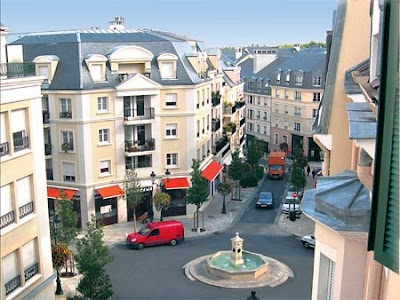
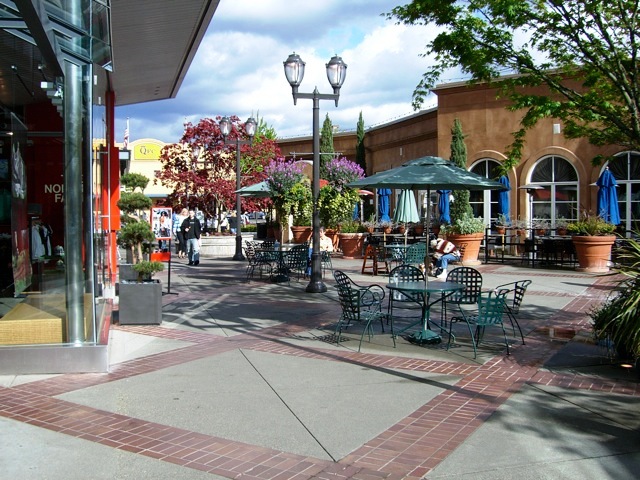
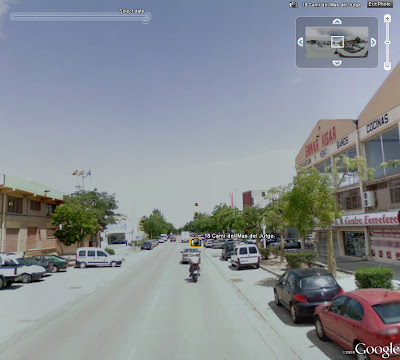
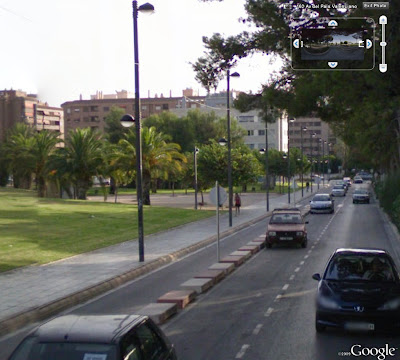
Which looks like a better place to Work? To Shop? To Play? To Converse? To Laugh? To Live? To Love?

The following photo-sets represent two distinctly different "genotypes" of place: the tax, zoning, and transportation policies shaping the physical form, the phenotype, of cities.

http://www.dkolb.org/sprawlingplaces/images/fullsize/spr.strip.pei.jpg


http://www.lightrailnow.org/images/mil-hwy-fwy-sprawl_cnu.jpg

Set 2:
http://www.bv.com.au/file/cecil_DaveMcCaf_web.jpg

http://3.bp.blogspot.com/_D5kx0bUGx_c/SHeJvxKmKPI/AAAAAAAAAa8/j3hvXB7m4r0/s400/plessis%2Brob4.bmp


http://www.myurbanist.com/wp-content/uploads/2010/02/CIMG0065.jpg
Image from MyUrbanist.

Monday, March 22, 2010

Myth of Choice, Continued

I have written a few times about the falsehood that is propagated as "choice" in the American Marketplace. Here, in the original post titled "Myth and Necessity of Choice in the American Scene":
The illusion of choice in the market dictating a suburban world is as innaccurate as the misunderstanding of the American dream, and libertarianism for that matter. The cities we've constructed has created a homogenous world that forces elderly and children to be at the mercy of the car, whereas in more walkable communities all are empowered.
In it, I compared cereal to housing choice and the reality that there is no difference nutritionally between fruity pebbles and honey nut cheerios. It is all an illusion. The cereal and the picket-fenced encased single-family home as American Dream, simulacra.

And in this post Traffic: Not the Movie, regarding transportation patterns and mobility:
Cars promised freedom. But is that freedom real or imaginary? There is typically only one way to the store or to school or to work. The only real freedom we have is the choice between the perceived faster lane and the lane we currently occupy. Does that help or is that just another extra couple of million that we spent on what was thought to be a luxury, more lanes, more flow, hooray!

I would argue that for the sake of an improved city, improved quality of life, AND improved traffic flow that we actually have to limit choice where it is inappropriate, ineffectual, and downright hazardous: the choice of multiple lanes and the fruitless, constant changing of those lanes, despite having no (or limited) choice in route.

Rather, we should replace false choice with increased freedom in areas where the impact is more positive: choice of transportation mode (and the accessibility/provision/and increased safety in all forms of that choice) and the choice of route. Choice of route is only possible with a less dendritic, less hierarchical, gridded system of smaller streets (but more lanes in sum) that is far more resilient to traffic backups.
It seems this idea is picking up steam, as StreetsBlog has picked up an argument made by a blog called Psystenance, echoing the very same idea:
Thus, the fundamental attribution error in transportation choice: You choose driving over transit because transit serves your needs poorly, but Joe Straphanger takes transit because he’s the kind of person who takes transit. This is the sort of trap we find ourselves in when considering how to fund transportation, be it transit, cycling, walking or driving.
It is worth the read if you are into the social science and economics behind cities.

Wednesday, February 10, 2010

Transportation Choice and City Building to Accommodate It

It's the dolla dolla bills y'all. First, a semi- book review:
--------------------------------
Last week, I destroyed Game Change in about three days, which does read occasionally like the hysterics of equally happy and jilted junior staffers aimed at their either current or former bosses. One thing that struck the biggest nerve with yours truly, was the level at which the old guard didn't or couldn't grasp the irresistible force that was the Obama Express '08, next stop White House.

This was particularly mentioned with regards to the Clintons and in a specific case with his eventual running mate, Joe Biden, with regards to Obama's proposed tax policy. Biden exclaimed, "that's it?! THAT is your tax policy?!" with pronounced bewilderment toward the seeming simplicity of it (the book didn't go into any explanation with regards to the two men's policy differences). To Biden, it seemed like nothing more than hollow rhetoric.

This is something that I've seen at every level of government throughout the country, and IMO why we see so much backlash towards bureaucracy and the unnecessary complexities of government. Each particular level of government at the leadership level was too involved in the minutiae, when they really should be up at the proverbial 10,000 foot level offering direction, but little in the way of detailed policy.

This is particularly true when it comes to planning, zoning, review boards, and city councils. Too many city councils are worried about every detail of every property, when they should really be focusing on simplifying and streamlining their own zoning documents. If you don't think the overwhelming complexity of city planning and zoning is a deterrent to real estate development, check your local 500- to 1000-page zoning document.

Set the goals, let your departments worry about administration, and focus on steering the ship.

At some level, I believe Obama gets that. His policies don't have the depth that lifetime policy-makers and wonks expect, because they...well, don't. Nor should they. This is the kind of simplified, tangled bureaucracy-cutting directive that this country needs, and all levels of government should take heed.

The lifers don't get it simply because Obama is the leader of an entirely new generation; a new phenotype if Howard Bloom is to believed. Millennials think differently than the previous world changing generation that has preceded them, the Baby Boomers. It is no coincidence that Millennials went 66-31 for Obama and that they made up much of his campaign staff, including his still executive speech writer.
------------------------------------

Like government bureaucracy, mathematics can be similarly complicated and confounding. Especially when you consider that our lives for the past fifty plus years have been defined and controlled by equations that are incomplete. By this, I'm referring to all those things that were determined to be too subjective to appropriately assess the value of, so they were in turn, left out. Who needs clean water, clean air, quality of life, etc.

Before such hysterical rationality dictated our lives, a politician once declared that the citizens of his city demand two things: Justice and Beauty. This is what we call, a pattern. A simple guiding principle, establishing a hierarchical decision-making process that empowers each level of the chain.

--------------------------------

Cities are often also thought to be complex. Perhaps this is only so, because no mathematical equation has been able to accurately assess or predict a city, other than to simplify a city into its component processes. What if rather than looking for more complex equations, we start thinking simpler? The water bodies of the planet are infinitely complex in their physical permutations, but the defining equation is that all water seeks to find its own level, and gravity does the rest.

My recent post last week took recent examples of theft in downtown Dallas and extrapolated it to a larger issue, the requirement of all to own and maintain a car in order to participate in what we call civilized society. I suggested that some incremental measure of crime and despair is driven by the lack of mobility or choice in transportation. If we had a similar directive to assess problems and affect decision-making like "Justice and Beauty," how much better off could we be (this makes the assumption that available lifestyle choice, in particular mobility, is a form of justice).

In the previous post, I referenced a study showing that more walkable cities can have car ownership per household rates at or near 50%, whereas Dallas finds itself at 10%. A new study referenced by the New Republic and conducted by Universities of Alabama and Florida (who knew they could cooperate?), states that residents of walkable communities save 16% of their income compared to those in non-walkable environs. Residents in walkable communities have a choice: they can have a care, if they so choose. The report goes on to suggest that this costs the nation trillions of dollars spent because of a lack of walkable communities providing adequate choice.

We know Dallas would look much differently if it were to approach a 50% car ownership rate, but how would it affect the local economy? Applying that % of $ savings number to two hypothetical cities of 1 million people, we will calculate the implications.

First, in order to compare apples to apples we need to define our variables and controls. The variable will be the rate of car-ownership per household, city A will be 90% and city B will be 50%. While these car-ownership rates would likely have drastic effect on spatial organization and, in turn, real estate values, we will for the time being ignore those differences (ahhh, too complex!!!).

The controls will consist of population size of 1 million, household size we will use 4, meaning # of households is 250,000, median income of 50,000 per household (if for no other reason than being a round number), while the report mentioned above used 16% as savings for walkable vs. sprawl, we will use 20% because that report makes no distinction for car-free which then averages and dilutes the savings.

Oh, and one last control: people are people. If you are the type of person that says, "shutup we love our cars u no good yella nazi hippie commie jerk." I am applying a system where choice is part of the equation. You are transferring your personal preferences onto everyone else in that system.

If everyone felt like you, the car ownership rate wouldn't vary so much and so predictably based on city form. City form is driven by transportation expenditures. Car ownership is a by-product of that, one whose machinations were too big and unwieldy to appropriately apply the breaks to a downhill-rolling snowball. So give up the phony-libertarianism. Your lifestyle is exceptionally defined by top down measures.

Now that I got that off of my chest, onto the back of the envelope (literally) calculations:

City A: 1,000,000 people
Households: 250,000
Car Ownership Rate: 50% (walkable city rate)
Households w/ Cars: 125,000
Households w/o Cars: 125,000
Median income: 50,000
w/Cars adjusted income minus transpo costs: 30,000
w/o Cars adjusted income minus transpo costs: 40,000
w/ Cars aggregate income: $3.75 billion
w/o Cars aggregate income: $5 billion
That is a total of $8.75 billion in income, transportation adjusted, assuming that excess transpo costs largely leave the local community by way of oil, gas, car, etc.

City B: 1,000,000 people
Households: 250,000
Car Ownership Rate: 90% (Dallas rate)
Households w/ Cars: 225,000
Households w/o Cars: 25,000
Median income: 50,000
w/Cars adjusted income minus transpo costs: 30,000
w/o Cars adjusted income minus transpo costs: 40,000
w/ Cars aggregate income: $6.75 billion
w/o Cars aggregate income: $1 billion
That is a total of $7.75 billion in income, transportation adjusted, assuming that excess transpo costs largely leave the local community by way of oil, gas, car, etc.

The difference between the two is that the more walkable city maintains $1 billion per year within the local community. Because it is local and largely discretionary, it often translates into housing costs, which is why you see higher housing costs in each of the more walkable cities shown in the study referenced. This directly counters Joel Kotkin's assertion that cities should be measured on affordability.
---------------------------------------
Furthermore, cities built around the car have to provide greater infrastructure to support the excess stress cars place on the city. Ahh, the multiplier effect. Here is where the numbers really get crazy:

City A population: 1,000,000
City A freeway miles per 1,000 people: .564
Freeway lane miles: 564

City B population: 1,000,000
City B freeway miles per 1,000 people: 1.291
Freeway lane miles: 1,291

With land acquisition, design, and construction, an inner city freeway can cost upwards of $100,000,000 /mile.

City A freeway cost: $56.4 Billion
City B freeway cost: $129.1 Billion
-----------------------------------------
How about all that parking. If we take the required parking for a car-oriented city like LA and that of San Francisco, we can begin to calculate the cost of parking on a city. Taking Professor Donald Shoup at his word, each car in America has at least 4 parking spots provided for it. Also, he has stated that San Francisco's required parking rate is 50x less than LAs. Let's also assume that each home that chooses to have a car has 2 and that the average parking spot costs $5,000 (not including spatial dislocation costs).

City A households: 250,000
City A households w/ cars: 125,000
City A cars: 250,000

City B households: 250,000
City B households w/ cars: 225,000
City B cars: 450,000

Even though the walkable city will typically have a lower parking ratio, to keep things somewhat similar, let's just assume both provide 4/car.

City A parking spaces: 1,000,000
City B parking spaces: 1,800,000
City A cost for parking: $5,000,000
City B cost for parking: $9,000,000

Total cost savings in walkable city of 1,000,000:

Income multiplied over earning period of 40 years:
$40 Billion

Highway savings:
$72.7 Billion

Parking savings:
$4 Billion

I just identified $116.7 billion in savings for a local community that chooses walkability to define its future. Now THAT is green. Of course, this doesn't even begin to scratch what Harvard economics professor Ed Glaeser has defined as the role of cities in the future economy:
"the economy is different now. It no longer revolves around simply making and moving things. Instead, it depends on generating and transporting ideas. The places that thrive today are those with the highest velocity of ideas, the highest density of talented and creative people, the highest rate of metabolism. Velocity and density are not words that many people use when describing the suburbs. The economy is driven by key urban areas; a different geography is required."
Density. Density can only be made livable through walkable design. Cars and their infrastructure are an unnecessary and costly barrier, a tax, to the free exchange of ideas in the new economy.


Myth and Necessity of Choice in the American Scene


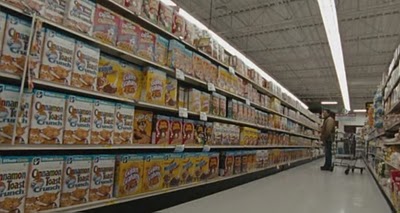
The beauty of having a multi-screen setup for your home computer is that you can watch movies while you work. As a child of the internet, if itunes, a movie, four browser windows, photoshop, CAD, InDesign, and various folders aren't all open, some things just don't seem right with the world. I happened to have Hurt Locker on today, when this shot washed across screen #2. How serendipitous.

This post started as a tweet I made a month or two ago from the cereal aisle in a grocery store a few weeks back, which then turned into a series of tweets as I tangent tripped:
The myth of variety in the American marketplace. There may seem like a million kinds of cereal but they're all made of the same stuff

Myth of variety 2. There may seem like a million suburban tract homes. But they're also made of the same lousy stuff.

Myth of American marketplace 3. Those low costs where you think ur saving. U r paying for it thru all the costs that were "externalized"
Perhaps, choice is the preferred word than variety, because they are different but the choice is irrelevant. Housing choice is for the most part is the equivalent of cocoa puffs and fruity pebbles...all made of the same crap underneath: corn starch, artificial coloring, flavoring, and some bran flour. Flip the formula around a little bit and you get a two-car garage, a pool, and a third half-bathroom.

A house should always be first thought of as a home. It is first shelter, then a place of comfort. Unless you happen to catch a bubble at the right time, which is difficult especially when the power of positive thinking irrational exuberance kicks in housing, thinking of it as an investment is typically not a good idea. Despite what conventional wisdom might tell you. Conventional wisdom has a short memory...and it is often manipulated by the National Ass. of Realtors.

Housing costs are always pegged to income. There is always x amount of people in the world, y amount of housing units, and z amount of money. All of which are interrelated. When you start adding distance between housing and jobs, markets, etc you start raising the cost of that housing in an externalized fashion because of the energy exerted traversing those distances, over and over and over.

The noughties saw rising home values and falling incomes as we leveraged ourselves to the hilt. Cities will be contracting in the "great reset" of the unnecessary complexity that was once considered "modernity." The brand new house you just bought out in BFE, that you thought was a great value, could very well have as much value in twenty years as the nutritional value from those honey smacks.

It really was a steal...from you...and all of the taxpayers supporting the infrastructural costs that were externalized (onto you) perpetuating what you thought the American dream is.

In fact, the only way for housing to be "sustainable" or a valuable investment beyond a shelter is for one generation to pass it on to another free and clear allowing them to focus money and energy on other pursuits, like bettering themselves. THAT is the American dream. And for that to happen that home has to be in a location as well as designed and constructed in a way that is suitable (or at least adaptable) to those future generations.

The problem is that so many of the houses built in the last twenty years have a shelf life no longer than twenty more years under the ruse of the NAR that is their simulated version of the "American Dream." Considering that suburban housing really didn't become prevalent until the Serviceman's Readjustment Act for returning soldiers in 1944 and the National Highway Investment act of 1956 did suburban housing really explode, building off of the various Levittowns and Americanized Garden Cities. Somehow I think the American Revolution, the Civil War, and either World War were fought for suburbia.

Point is, that if the American Dream is older than suburbia, how can suburbia be the definition of what the American Dream is? The short answer is that it, of course, is not.

Many of the negative comments in the various media outlets that have recently begun to pick up articles from this here blog, typically all come from the same angle: that in some way I'm trying to force them to live the way that I do when I'm merely offering the eulogy for the trivial things that they apparently hold so dear. What this is called, is transference. These are people that want everybody to live their way, where I'm suggesting that choice is necessary.

I blog here because I am showing how difficult (yet possible) it is to live the way of my choice. I blog because of the antiquated zoning regulations, highway funding, and state and federal street standards that force a suburbanized way of life and mandated car ownership onto all of its citizens. As Chris Leinberger has shown, the facts support me.

Suburbia offered an escape from the poverty, despair, and particularly the pollution and soot of industrialized cities. Highways were built as a conduit for people in and out of cities under the illusion that your own house and car were symbols of prosperity. Furthermore, highways became a centripetal force themselves - scattering people across the countryside into was is the anti-city.

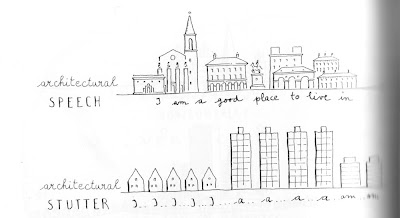
Sketch by Leon Krier

The illusion of choice in the market dictating a suburban world is as innaccurate as the misunderstanding of the American dream, and libertarianism for that matter. The cities we've constructed has created a homogenous world that forces elderly and children to be at the mercy of the car, whereas in more walkable communities all are empowered.

My interpretation of the American Dream is one of opportunity. Opportunity requires choice, as does a functioning market economy. The housing market has and will continue to fail as long as we build housing as "product," not livable, walkable places. Livable, walkable places allow for all to participate in community and the economy.

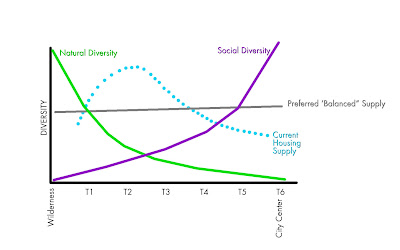
The tool typically used to show a greater range in housing choice is the transect. As I've crudely shown on the diagram above, the blue dotted line represents a rough estimation of housing supply. I've often written about Valencia, Spain as it is constructed in a way that is transferrable from one generation to another, thereby instilling value for future generations. We on the other hand will be completely reconstructing and reorganizing our cities.

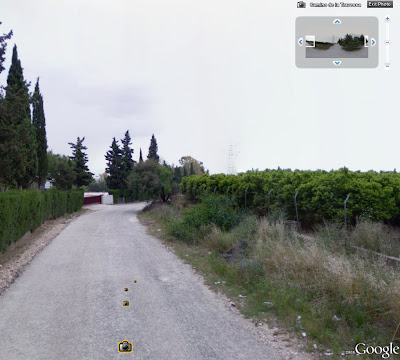
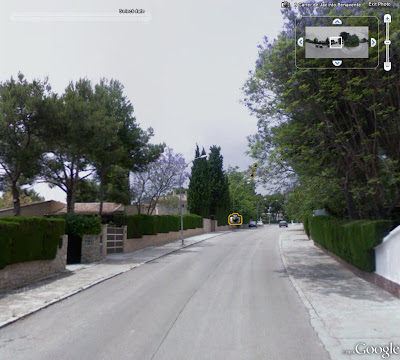
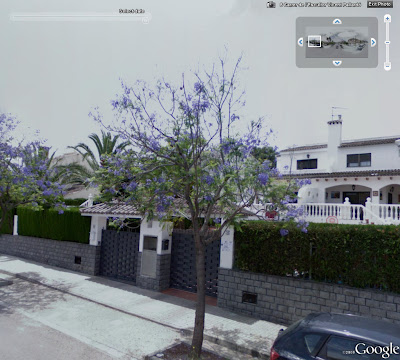
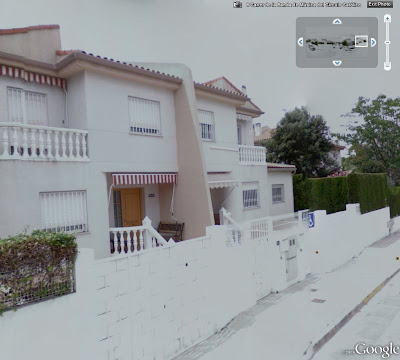
A quick tour to show the transect as it fully built out well before the idea was even codified (or given name for that matter) as it emerged by creating variety, only allowed by a robust and flexible transportation network.


Nearby agriculture.


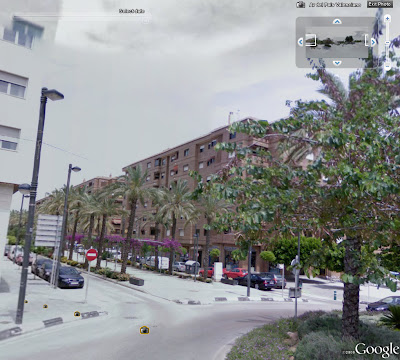
Want to live in a mansion? If you can afford it, they're back there.


Small lot, single-family housing.


Attached housing.


Multi-family.


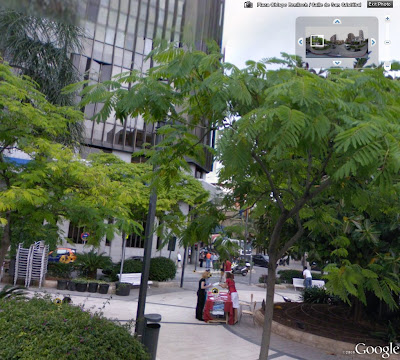
Want more action, try the City Center.

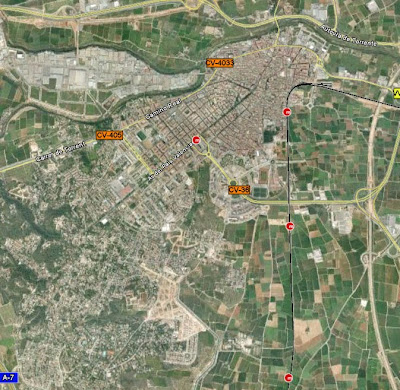
Except, this isn't Valencia. HaHA! I pulled a fast one like I was a realtor.

This is actually a suburb of Valencia called Torrent, which is home to 78,000 people. Below you can see it's form with minimal highway intrusion. The urban core is near the metro station to the Northeast. The rest of the community extends to the Southwest as density diminishes. The industrial area is the peninsula like form between a waterway and the highway to the North. In other similar suburban Valencia communities, the railroad is usually the demarcating line between the living area and the industrial zone, station serving as the dissemination point for goods and people.


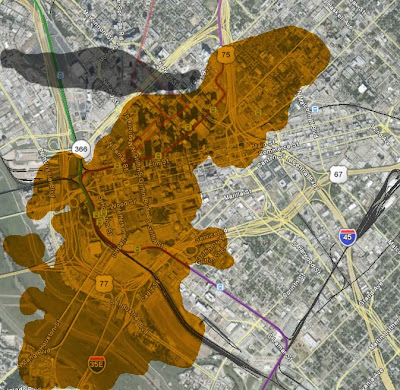
Below is the same 78,000 person community applied at the same scale to Downtown Dallas, if to only show how efficiently the land is used, while providing all of the housing choices shown above, and designed in a people-friendly manner.


The gray represents the industrial zone, what is typically known in the states as LULUs, or locally undesireable land use. Ya know, much like freeways are, except these are even designed for people:


And one going away shot of one of the central squares. Notice the divided bike lane:


In order to survive, our suburban municipalities, are going to have to prove their worth for future generations. Nearly all will be unable to continue functioning solely as bedroom communities and will have to look to places like Torrent for how to redesign their communities; to densify, to be usable, functional, productive, and livable in the 21st century.

If our economy is to get off the ground again, we must focus efforts on the provision of choice, in transportation, housing, and places. A polychromatic variety of experiences and densities (designed livably) creates for, in essence, competition, thus allowing for positive feedback and better, more productive places.

All "stimulus" efforts should be focused on building livable (and walkable) cities allowing for choice in housing and transportation, not only for the few, but for all. Choice, it is the foundation of the American Dream and a prosperous economy.