Showing posts with label Clown Buttons on a Clown Suit. Show all posts

Thursday, October 15, 2009

Conventional Wisdom, Empiricism is Calling


The following is the playbook that the Conventional Wisdom follows, thinking what is necessary for the evitalization of Downtowns. The CW slowly moves down the checklist one after the other. When reality sets in that what they've been told (and led to believe) really isn't achieving what they hoped (not that Conventional Wisdom ever puts cause and effect together), on to the next magic bullet:
  • Stadium. That's the ticket.
  • Access! A new Highway will deliver shoppers and commuters and tourists and sweetness and happiness and rainbows and lions and tigers and bears.
  • Convention Center. That'll do it.
  • Convention Center HOTEL! Silly us, how could we have a convention center without a convention center hotel?!
  • Ummm, ANOTHER STADIUM!!!! Gotta give those billionaire owners their own stadium. They say so themselves. Just ask'em. It'll make for a super killer one-stop Entertainment District, like a Chuck-e-Cheez!
  • A museum. I don't care to or for what. It's the missing piece. Now sit down and shut up. I know what I want and I need it now!
  • Parking!!!! Duh. What were we thinking?!?!?! Where would all of those theoretical tourists park when they come to visit HappyTown???!!!11!
  • Recruiting new Corporations is the answer. If we only offer some more tax breaks they'll come and bring jobs and they'll eradicate the homeless via secret deathstar teleportation gamma ray thingamabob.
  • We clearly have to convert these streets to one-way. This grid is just so congested. It's the only way. How can we get people out of here as quickly as possible so they don't have to deal with all this messy urbanism?? They are holding us back as a City!!!
  • And ya know what? While we're at it. Let's widen these roads. We've got sidewalk space to spare. Gawd knows nobody ever walks in this City. The traffic engineers say we can get Level of Service 'A' streets if we do as they say. Damned if I know what that means. They've got credentials and shit after their names.
  • Pritzker Prize winners. Who is the latest architectural fad turned celebrity? Lib-a-skuh-what? Sounds foreign. I'll take one of those! He'll save us like the Spaghetti Monster himself patting us on our head as we flash back to our childhood helplessness, dependent upon a paternal figure to take us on a Summer Vacation to the Disney Land of urbanism.
  • A Performing Arts Center. Nay. Other cities have those. We can do better. FOUR PERFORMING ARTS CENTERS!!!!!!!!!11111!!!!!!!! /takes a drag from post-coital cigarette
  • Man, we sure are running out of ideas here. How 'bout an old-timey lookin' rubber tired trolley, and there ain't no trolley like a rubber tired trolley cuz a rubber tired trolley takes gas. It'll keep everybody reminiscing about the good ol' times like the 50's (when women were in the kitchen, minorities in the woodshed, and gays in the closet).
  • Homeless Shelter. No, not to feed, house, treat, or train. You're so naive. We gotta warehouse those leaches. Keep 'em outta site.
  • Recycling Program. That'll keep those hippies happy.
  • Retail. Oh fuck! We added all that parking and Gap, Chilis, and Planet Hollywood all say we need more. What are we gonna do?!??!! Might as well, adhere to their coersion. They're in the business. Free market knows best. Oh, they also say they need free rent.
  • I think we're almost there. One missing ingredient to HappyTown fulfilling our wildest fantasies and rainbows shining overhead and raining kittens daily. But, what is it? I can't think of it. Fukit. We're fine as is. I've got my three car garage, a boat, a hummer, couple a' kiddos parked in front of the big screen ("keep 'em entertained Tawmmy the Tank Engine! Man, I'm tired of dealing with their shit" /mumbles under breath.), some neighbors (that I don't know), and, hmmm, what's this in the mail? Divorce filing?
May I introduce you to HappyTown:


Detroit!

Mmm-mmm-mmmmmm. Sure does look pretty from over here (in...another...country - with better healthcare, education, no highways ripping apart neighborhoods or disconnecting from waterfronts).

Tuesday, October 6, 2009

And Our Collective Nose Grew THIS BIGGGGGG

Little puppet made of pine, awake. The gift of life is thine.

http://blog.timesunion.com/holistichealth/files/2009/01/pinocchio1.gif

If we do anything well, it's a self-promotion that borders on boastfulness. Perhaps there is some fundamental ground to base it on, other times, not so much. Newsweek, long ago giving up its title as worthwhile in-depth reporting outlet, has put forth a review of the Dallas Arts District in, "Deep in the Art of Texas." A quote:
When the entire arts district was mapped out in a Dallas city plan in the 1980s, the site was a sea of parking lots wedged between a freeway and the business district. De Grey, a Londoner, recalls one of his first trips to Dallas, when he emerged from "a downtown restaurant at 9 o'clock and there wasn't a soul on the street." More recently, downtown has become home to young urbanites lured by gentrification; the expanded arts center has surely helped spark the trend and is expected to attract more development. "On a Saturday morning you can go downtown and everyone is out on the street, walking their dog, going to the gym," says Lawrence Speck, former dean of the University of Texas architecture school. "It's miraculous."
Is that so Professor? Miraculous is a bit strong. Last Friday, I walked down the middle of a wide and should be busy street by the Arts District for over a block....because I could. There were no cars, less people if counting via census standards.

Now I've never met Larry Speck, and I've heard nothing but praise from colleagues that do know him, but I worry about this kind of talk, especially with regards to the two newest projects going on, Complete Streets Initiative and the Downtown 360 Plan.
Dallas has managed to avoid the grandiose errors of its New York forebear with a pedestrian-friendly layout, generous public spaces, and architecture that begs for your attention.
This sounds as though it was written by a P.R. department. Do you know why marketing has lost traction with the Millennial generation? Because they feel as though advertisers are lying to them, which in many cases, they are.

I have no doubt in my mind that the Wyly and Winspear are absolutely amazing on the inside. But, as we found out with Medical Districts (like any "district") what is INSIDE the walls of the facilities and/or institutions is generally unrelated to the quality and success of a district. The experience OUTSIDE the walls defines the district. To call the Dallas Arts District pedestrian oriented is like calling a Grapevine Mills Mall pedestrian-oriented. You drive to it, you park in a garage, you walk around inside for a little bit, then you get back in your car and drive home.

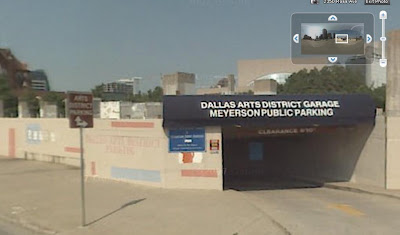
I've got your pedestrian orientation right here...

This wall once had children playing painted onto it. B/c ya know, no children would ever actually be found playing anywhere near it.

The Arts District is by no means a fait accompli. But, like Main Street (and beyond) it's bones and connective tissue have to be fundamentally altered to ensure as many connections outward as possible, redoing the streets to make them BOTH more "complete" and contextually-sensitive (this is my primary worry with the complete streets initiative - that it will add bike lanes, transit, etc. and forget to be context-sensitive nor narrow the streets).

The author concludes by asking a similar question:
But weaving it all together to create a dense and urbane neigh-borhood requires more than dramatic buildings by famous architects. Ask the people in another car-centric city: Los Angeles, where the vaunted Disney Concert Hall (also by Gehry) has had almost no effect on creating a street life downtown, even though Gehry proposed a plan, never instigated, to help do just that. "It's almost impossible to design a city," Piano, architect of the Nasher Sculpture Center in the Dallas arts district, once said. "What makes a city beautiful is that it's not designed. Time makes cities beautiful."
Well, yes and no. Yes, it does take time, but suggesting you can't design a city is a cop out. An excuse to do whatever you feel on a building and in some cases, turn your nose up at the city entirely. What we CAN do is create the framework for investment for people places.

Make the streets more livable, and we'll see the necessary "fabric" infill around the architectural icons giving them an entirely new life, making the area truly mixed-use, and populating the Arts District with something more than painted people on the walls.

Sometimes I get the sense that the term pedestrian-oriented is, at best, misunderstood and at worst, bastardized. The fundamental point of something being pedestrian-oriented is the proximate connectivity of a multitude of people, places, uses, businesses, and things all interacting, communicating, and providing enhancing feedback loops. This is why cities have always been the fundamental human tool for wealth creation, because of how they are structured.
"Your car is like your mother in law-if that's the only thing you have, you're in trouble." -Jaime Lerner
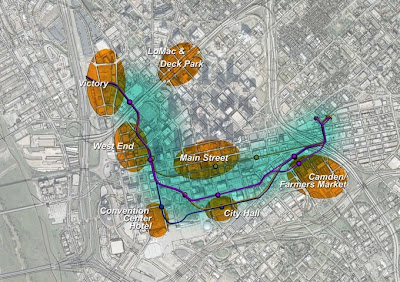
If we don't address the streets and take the dominance away from the automobile, none of these areas will be true successes as they won't stimulate synergies between them. Rather than a quilt, we'll have a bunch of useless patches:

Diagram showing the catalyst for development potential of D2, stitching disparate districts together, currently these districts float without coexisting nor benefitting from proximities to each other. The traffic patterns and the goal for level of service A ZOMG! are the primary reasons why:


There is no overlapping of these sub-districts b/c arterials form moats around them. The roads go THROUGH places not TO places. The arterials are important for linking places, but once inside the roads should be so much about movement as convergence, becoming sociopetal, rather than sociofugal once inside.

One of these days, I'll get finished the Dartmstadt Case Study, which examines a "complete street" with traffic flow, tram, bike lanes and sidewalks, and illustrates how the engineering and design of the entire road changes based on whether it's in the downtown core, the arterial linking downtown to its "suburbs" (which are completely walkable and mixed-use, just less dense), and in the suburban core, which functions as a small downtown.

Friday, March 27, 2009

Architects, Cities, Countries, et al. Missing the Point


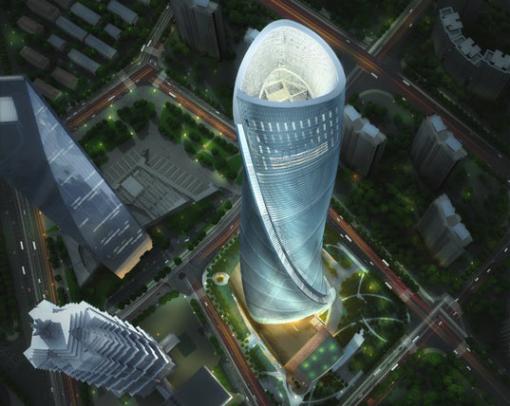
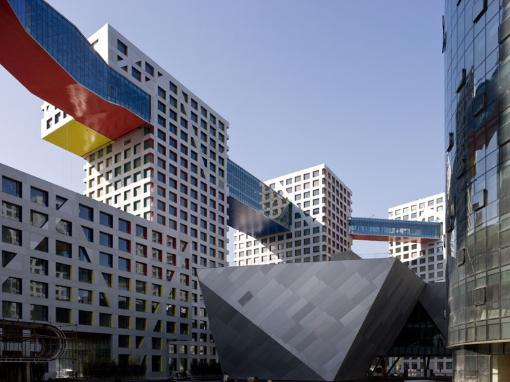
Look Ma. It's so green, you don't even have to go outside...because the air is too umm visible to breathe!

TreeHugger on the wonderful world of "green" buildings in China:

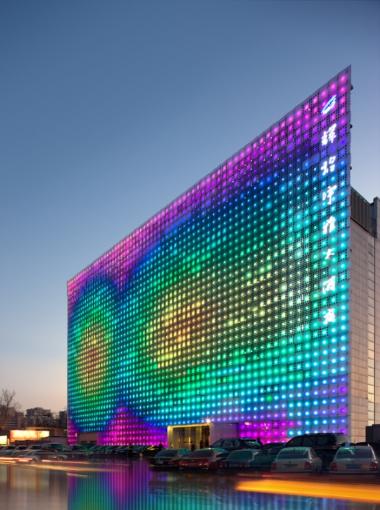
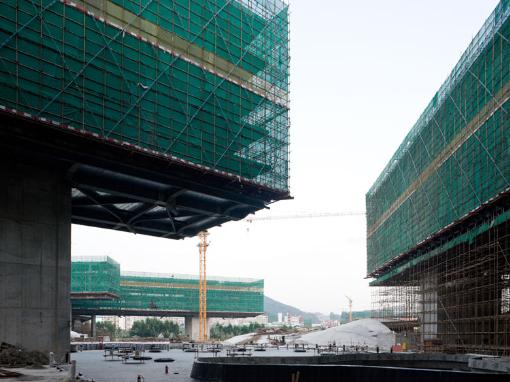
Let's go thru a sampling of the slideshow, shall we:


I see London. I see France. I see a tower, a park...oh, it's a tower in a park. How has that worked?


And here we have Stephen Holl doing what he does best. Hideous effing buildings.


And here is a drive-in movie theater.


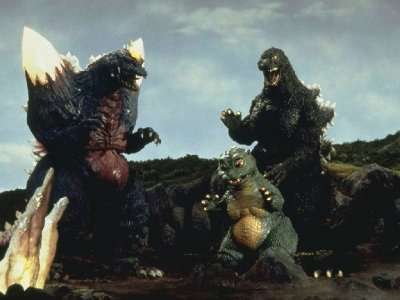
And getting the scale of space all wrong. Unless Godzilla and Space Godzilla choose to move their young family across the East Sea for the better schools.

Monday, February 23, 2009

Bird's Nest to Hatch Western Consumerist Wonderland

Will anybody ever learn? From the LaTimes.
"They wanted to build 'the world's biggest this' and 'the world's biggest that,' but these buildings have almost zero long-term economic benefit," economist Huang said.

Moreover, the makeover of Beijing for the Olympics led to an estimated 1.5 million residents being evicted from their homes, according to the Geneva-based Center on Housing Rights and Evictions.

Wednesday, February 11, 2009

The Challenge of Downtown Dallas


From an old interview transcribed in full on New Urban News that has never left me since:
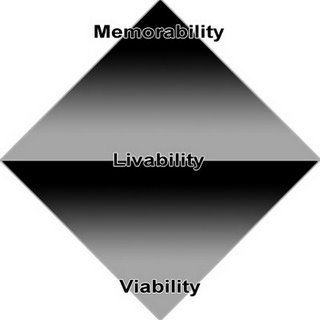
Cities and towns go through cycles, or different stages of a cycle. Some cities are in a “viability” cycle. They’re just trying to survive and create a sustainable economic base. Many of these issues are really regional in scope. A sustainable economic base, good infrastructure, and regional facilities are some of the issues. Other cities are in a “livability” cycle or a “memorability” cycle. Livability issues tend to revolve around how to make a city a good place to live: housing, schools, parks, and open space. Memorability issues tend to organize around how cities can do things in a way that is unique and idiosyncratic to the people and influences of that time and place.

Much unsuccessful planning in America has been due to using strategies that do not align with a city’s current phase of issues, often fighting the last war or the one that people wish to fight.

The interviewee referred to these stages as cyclical, which in some ways within the competitive nature of cities can be, but do you really see a place like Copenhagen falling from Memorable to something below livable any time soon? Furthermore, economic issues are certainly at play, but they can only be viewed along a much longer time line than pinpointing what stage a given City is at a fixed point, i.e. Detroit in 1920's "The Paris of the States" vs. today, where it is more like the Acropolis of the States.


Obviously, today Detroit is trying to stay viable after its auto industry has floundered helplessly despite all efforts otherwise. Dallas, on the other hand, is certainly viable from an economic standpoint as a banking and corporate center.

It is also livable in many places depending upon what you are looking for, but this continuum can also be pinpointed on certain places. Why else would 5 million people (and growing) be in the metroplex? In this case, I'm referring to Downtown Dallas. Once again, it is viable currently as an office park and a modicum of individuals like myself who choose to live near to where they work and want something a little different than the Ken and Barbie world of uptown (despite how nice the view might be).

As Heapes points out in the interview, during any planning or design process, one has to accurately assess where a City (or place) stands along this axis. Downtown Dallas in my estimation is in between Viability and Livability. No matter how positive I attempt to be, it is impossible for me to call it Livable currently, and it needs to be. I think all of the dark units in the Mercantile Complex illuminate that point for us.

I have been saying since I moved here in 2002 that developers were going after the wrong market in downtown. They were chasing uptown rents/demographics without all the twenty years of Livability creation that went into State Thomas, McKinney Avenue and CityPlace/West Village. But, as Alex Krieger recently said, vibrant, urban streets aren't populated by the patrons of the W hotel.

The mistake the City has made thus far in attempting to stimulate downtown is that it is trying to skip the hard part. Through big, high profile projects like the Arts District, the Calatrava Bridges, the Trinity River, and last and most certainly least the Convention Center Hotel, the City is trying to jump directly from Viability to Memorability.

It is easy to just throw money at a city in the form of glitzy projects. What is difficult is being honest with yourself and accurately addressing the critical issues preventing a City from becoming Livable. I question how honest Dallas is prepared to be with itself (and by "Dallas" I don't mean any particular group, class, or profession, but simply my perception of the collective consciousness).

[I like to equate that process of critical self analysis to that of a dentist drilling down to the heart of the problem (without novocaine) rather than simply applying a veneer.]


I've gotten into several arguments with people (on this blog no less) accusing me of "not supporting the arts." As I have tried to say, I do, but not at this time or to the extent or expense quite yet when it comes to their effectiveness at stimulating any sort of real revitalization of downtown. All efforts should be made to make Downtown Dallas LIVABLE first, and then the special projects can really have an impact (and a tax base to support them).

If for no other reason, do it for all those visitors they expect to the Arts District (for that proposed subterranean garage) and to save the Arts District itself. You really think Dallas Socialites will enjoy visiting the Arts District when Downtown Dallas is crime ridden, blighted, vacant, and covered in surface parking lots????

---------------------------------------------------
I think I'll create a "Part 2" addressing all the physical design issues hindering the Livability of Downtown Dallas.

Thursday, January 22, 2009

On the Arts District and the Place Architecture is Leaving.

The Foster + Partners bldg is truly gorgeous. You could tell it would be from the very first renderings years ago. The OMA/Prince Ramus Borg Space Ship ...not so much.

[Imagery from nthomas7627's flickr photostream]


[A new analogy. Ready to capture hundreds of patrons of the arts.]

Unfortunately, for the Winspear, like many "object buildings" it needs a frame. We can frame it with our camera lens and it looks great, but ultimately a building is not intended to be experienced on a sheet of paper. I don't mean to be derisive about this building, but ultimately without the urban fabric to "frame" it, it is not an environment, merely an object.

This is the heart of the problem with architecture currently, which is really just residual from the 20th century and dying thankfully. A building has to know its surroundings. It can't exist in a vacuum. The Foster design understood this, which is why one can visualize it set within a more vibrant district lined with "background buildings." It is both dramatic and subtle, iconic yet with humility. The pseudo-Koolhaas/ultimately-Ramus building did not, which is why it looks like it is landing from outer space.

Rather than let it stand out against a foil of standard urbanity, the problem is exacerbated with other sculpture, crying babies screaming for attention. The arts district in its current bastardized form is incoherent b/c rather than stand out, it merely stands.

A singular building is a post card. A true urban environment is drama. We need to start working on making more movies.