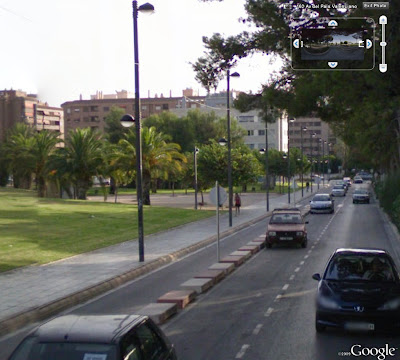
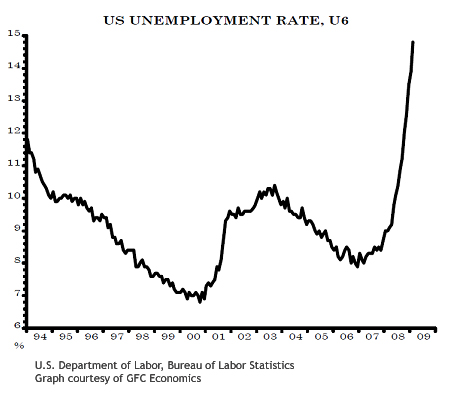
Showing posts with label Bottom Up Economic Development. Show all posts

Monday, April 23, 2012

How to Make $39 Million Look Less Expensive

Wilonsky at the DMN prodded me with a tweet about the City's Complete Streets 15 Pilot Projects, with a total bill for implementation being $39 million and change.

The Better Block guys and I chased this project based on the idea of incrementalized costs. In that, the full implementation wouldn't be realized (or expensed) until there were cheap trial periods in all of them to acclimate the citizenry and businesses alike along the corridor. In effect, testing and proving up the designs. And therefore, allowing an adaptation phase where things could be tweaked.

The manner the city decided to take incorporated some of these ideas, but ultimately decided on a more conventional approach and we see that in the costs quoted, ranging from between $600K and $6M. Our point was that these costs would be easier to swallow not all at once but after seeing new business and investment buy into the idea of complete streets as sociopetal places that bring people together to hubs of social and economic activity rather than sociofugal, essentially commercial arterials which are truly hell on earth.

After reviewing the briefing here, I like many of the streets chosen. However, my point isn't about the expense, but rather how cheap that $39M number is when we reframe the conversation. Let's look at the Magnolia example in Fort Worth, where the TIF paid for restriping of the streets, narrowed the road and added parallel parking. What was a four-lane road, became two-lanes with a shared center turn lane, bike lanes on both sides, and parking. I'll have to verify the cost figures with Kevin from FortWorthology as he's been directly involved, but while I don't think it ran into the millions, the cost was offset by rise in property values (hence the TIF paying for the improvements) and afterwards by an increase in sales receipts.

The key numbers are here:
  • Property values in the Magnolia "Urban Village" (Fort Worth's nomenclature for their priority improvement areas) - 2004: $33.6 million - 2011: $79.6 million
  • Sales receipts jumped in the year after implementation from a little over $3million to over $10million along the Magnolia Street corridor.
Again, I'll have to verify these top-of-my-head numbers with Kevin, but the specifics aren't as important as the general gains. Between the $46M increase in property value and the $7M increase in sales receipts, the city is recouping their upfront costs and will continue to do so in perpetuity because of the increased taxable value and economic activity.

Imagine if we could achieve similar results with our fifteen selected streets? $46M times 15? That's a $690M bump in land value. $7M corridor sales receipt increase times 15? That's $105M. At 2.71% property tax and 1% local sales tax, that equates to the city generating $18.77M more in tax revenue each year along these corridors cumulatively. In other words, that $39M for implementation is paid back in 25 months. After that, it's straight cheddar.

Or, ya know, we could spend to build more highways and ship tax base out of the city proper and do economic development the old fashioned way. I prefer the Magnolia/Complete Streets model.

Of course, this means our fifteen would have to be executed as well as Magnolia in Fort Worth. Can we do that?

Tuesday, February 14, 2012

Linkage

If you read one thing today make it this. Alternet cites a number of economists and economic theorists who are increasingly moving towards the massive structural shift side of the see-saw. Two key quotes:
Austerity and debt reduction will get us nowhere, in this view. In particular: it won't change the fact that we have too many manufacturing workers and too few information workers. Stiglitz argues forcefully that this gap is likely to remain open until our governments make a long-term commitment to do what they did in the 1940s -- that is, fund the kind of aggressive education, research, and infrastructure investments that will finally get us fully transitioned to the new phase. The current economic crisis is doomed to last exactly as long as we delay put off building that necessary to the new information economy. When we come out the other side, there will still be farmers and manufacturers — but even they will be leveraging the power of the Internet to create new wealth. Everybody will.
In other words the stimulus already spent was exactly what we thought it was. Not a stimulus at all in the sense that it would bring it back to life. More like a reanimation in the zombie sense, dead economy walking. We shoveled money into "shovel-ready" projects because city, metro, and state transportation agencies had plans on the books for new highway construction projects, entirely clueless about the massive shift underway economically and needed structurally. We spent to increase disconnectivity when we need to spend to increase connectivity and spatial integration: not more of the same, dendritic transportation patterns but replacing them with legitimate interconnected complex grids. Just like the internet, being connected means opportunity. If everyone is connected (physically and digitally) that empowers all of us to restructure the economy from the ground up.

And with that said, quote 2:

Another one is Thomas Homer-Dixon, a Canadian economist who wrote The Upside of Down. Homer-Dixon marshals evidence that all great empires rise and fall by controlling the dominant energy supply of their age. The Romans used roads and aqueducts to harness solar energy (in the form of food) from around the Mediterranean basin, and used that surplus to fund the most complex society of its time. The Dutch empire rose on its superior ability to master wind technologies — the windmill and the ship — to extend its land holdings, run early manufacturing industries, and extend its trading reach around the globe. The British empire rose on coal-powered steam engines, which gave it more productive industries, railroads, electrical generators, and faster ships. The US eclipsed the Brits due to its vast wealth in oil — a far more concentrated and fungible fuel — and inventions from cars and planes to plastics and fertilizers that allowed it to make the most of its advantages. And the Chinese are now making huge investments in renewable energy and safer, more efficient second-generation nuclear power, which they can use to fuel their ascent to global primacy.

The bottom line in Homer-Dixon’s theory is this: Everything that Americans understand as “wealth” under the current paradigm comes from oil. It’s the foundation of our entire economy, and the ground our superpower status stands on. Our cities are built on the assumption of cheap, plentiful oil. Our consuming patterns are made possible by a fleet of oil-burning trucks, ships, and planes that bring us goods made in oil-driven factories. Our warmaking machine, which is largely tasked with protecting our oil interests around the world, is the single largest consumer of energy on the planet. Even our food is created with vast oil-based inputs of fertilizer and pesticides; and we enjoy a year-round variety of foods (bananas! chocolate! coffee!) that is unprecedented in human history because oil makes cheap transport and refrigeration possible.

And the pain and fear caused when we're forced to face this fundamental fact explains quite a bit about why ideas like climate change and peak oil are so viscerally terrifying to so many Americans. (In many right-wing circles, denial about the American oil addiction is now a core piece of their political identity. It’s considered anti-American to even suggest that getting off oil is necessary or possible.) We are so deeply invested in oil, in so many ways, that it’s almost impossible for us to envision a world beyond it. We stand to lose so much that it’s hard to fathom it all.

And this, says Homer-Dixon, is why no empire has ever survived an energy-related phase shift with its full power intact: the reigning hegemons are always too deeply invested in the current system to recognize the change, let alone respond to it in time. And so they are always superceded by some upstart that’s motivated to put more resources and risk into aggressively developing the next source. The decline of oil as the energy reality of the world has deep implications for every aspect of American life in the coming century. It’s a phase shift at the deepest level.

Buckle up...your bike helmet.


Monday, May 10, 2010

Mission Accomplished...What Hath We Wrought?!

"Keep the Cars Moving"


OBEY.

Thanks to Robert Wilonsky at the Observer for alerting me to this video from the 1950's imploring Dallas to move that traffic. It is worth the watch if only for the old video shots of 50's era D-Tex, which are pretty cool. There is no embed code with the video, so you have to go here to watch it, but I'll include some stills with general commentary.


My favorite part of the entire thing is how unaware this video and by extension transportation policy is still to this day of the logical inconsistencies underlying their theology. Got to move that traffic swiftly, BUT DON'T SPEED! Say wha?

So we design roads comfortable enough to drive at uncomfortably fast speeds then devote resources to regulation and enforcement of those streets.


To better understand this video and the policies espoused, it is important to understand the general mindset of the day. At the time, economic productivity was defined by the assembly line. Theoretically it invaded all fields including urban design. However, urban design being that it is complex is antithetical to the assembly line which requires simplicity and a vague, most likely, over-simplified notion of efficiency.


But, our theoretical models suggest we must keep building new lanes to tantalize you with the illusion of choice and that the other lane might always be moving faster than the one you are currently idling along.

So in order to distill the notion of city into simple enough terms that economic productivity theory of the day could work with, the various segments of urbanism were compartmentalized in every way possible: from single-use zoning to transportation policy, which is what we have here. the resultant system is one where each of the specialized professions and their tailored goals are in competition with one another, pulling the city in opposite directions rather than orchestrated and moving in the same direction toward a singular goal. The destination of a great city.

By doing so, they took 10,000 years of accrued awareness and understanding of urbanism and flipped it on its head favoring one-way streets, no on-street parking, road widenings described as dire necessities, and other design mechanisms to ensure that there is no "friction" impeding the efficiency of the conveyer belt of the auto-oriented assembly line. Placemaking and livability be damned.

Unfortunately, friction, convergence, choice are all necessities for cities.

Why? Their stated goal was that it was necessary to make downtown shopping work... uh, how is that working out? This is what happens when you take thousands of years of empirical evidence and throw it out the window in favor of ideological righteousness.


However, the report is right in one sense, traffic is the lifeblood, the pulse of the city. What it gets wrong is that it oversimplifies. It streamlines. It only looks at traffic from the perspective of the car. In actuality, traffic should be thought of as all forms of transit, preferably those with the least cost and greatest efficiency, walking.

The city as an assembly line does not make for more efficient cities. Universal auto-ownership does not make for more democratic cities. Cloverleaves do not make for free markets. It is all mumbo jumbo. Scientific term.

Today, rather than assembly lines and the model of economic development of early 20th century fascist countries (highway building and militarism) guiding urban policy, we are turning to new fields of study which are far more practical to how cities actually work: computing, networking, fractals, complexity, crowd sourcing, behavioralism, empiricism, etc.

For an example of how single minded transportation policy actually undermines the notion of efficient markets, we'll take a quick tour of a few roads around the City.


Lemmon Avenue. It is wide. And while it is two way, functionally it operates more as a one-way hybrid with the grass medians. Medians make for chutes, which theoretically help traffic to flow. However, flowing traffic, particularly at a high rate of speed prevents traffic from crossing. That is traffic of all forms, including pedestrians. The best you can hope for here is that some of the residents might walk from the neighborhoods adjacent to the drive-thrus. Because there is no on-street parking, it all has to happen off-street. Because it is off-street, the buildings are set back with parking in front for convenience.


Greenville Ave where Mick's and Hurricane Grill once stood. /Pours liquor.

Greenville is an improvement over Lemmon, but it isn't perfect. The scale of the street allows for a clustering of commercial space all along Greenville rather than the linear "strip" like on Lemmon. There is some parking, but it doesn't define the space nor disconnect it from the neighborhood or the synergistic effects of the adjacent buildings. Some pedestrian crossing can occur because the traffic is slowed enough by the scale of buildings and activity on the sidewalks providing friction. Any higher rate of speed here and the sense of place is destroyed.

Side note: keep this episode of South Park in mind next time you are sitting at the Blue Goose and a Harley rides by, over and over and over again. Braahhh-br-br-br-br-br...


Lastly, the extreme example. The three-block stretch of Main Street. The actual beating heart of downtown Dallas that traffic engineers nearly extinguished. Driving on it is actually a hassle...which allows for closer, more efficient connections to be made. Why? Because the nature of the street favors pedestrianism to the point of jaywalking, all of the connections made between source and destination: office to restaurant, office to office, home to bar, bar to back home (forgot the circuitous, stumbly route).

In this way the strict goal of moving cars undermines the viscosity of connecting people to destinations. Roads become barriers to connectivity, which themselves become undesirable to be in, to live on, or to walk along (or more importantly, across).

Once that occurs, the roads become repellent forces while placemaking and economic efficiency requires magnetic forces, things people want to be around. Why economic efficiency? Because of distance and the cost of energy to traverse that distance, which you, the consumer, bears.

Furthermore, each of the green lines represent (virtually) energy nil interactions compared to the drive-to scenario. Most intra-city destinations are ones that could occur without getting in a car or on a highway. For example, the average Roman citizen can take care of all of their daily needs without a car. Having one is a luxury. You can if you choose and can afford it. On the other hand, in Dallas, you MUST have one.

The delta between energy spent in one scenario vs. the other becomes the cost or tax for every single interaction we have. Every connection, takes car ownership, maintenance, gasoline, and the taxes to cover road construction, maintenance, and eventual widening of roads. All costs externalized onto you. In that our cities are the physical manifestations of our economies, the local economy organized around highways, arterials, and car ownership is the manifestation of a pyramid scheme.

To put it into perspective, the average American drives 12,000 miles/year. While it is difficult to find exact numbers, there is some data suggesting that 75-80% of all trips are less than 5 miles. Without knowing how long the other trips are, or the purpose of these trips, it is difficult distill these numbers down further.

So for simplicity's sake, let's say that with a different, more walkable city form, we could reduce the amount each of us drives by half. That is 6,000 miles saved accomplishing the same amount of trips. Mobility isn't reduced. It is improved via better urban design. 6,000 miles in a car with average mpg of 20, and $3/gallon gas, that comes out to $1,000 per person/per year saved. In a City of 1,000,000 people, that is $1 billion/year still in the local economy.

Of course, this also doesn't count the reduced infrastructure and tax burden necessary to support said excess infrastructure (or the band-aids for those mistakes) or the long-term costs of pollution, health effects, traffic collisions, or reduced productivity due to car-traffic jams, the stroke in a car-oriented economy.

As Mumford says, just make cities for lovers and friends. Ignore car-oriented theology and focus on placemaking. Want to be a world class city, become the most walkable city... it will also stimulate the economy exponentially.

Tuesday, May 4, 2010

How To: Fail? Temporarily, At Least


Given the notoriety local mega projects around the Metroplex have garnered, and rightly so in many instances (see: here, here, and here), I found a recent article on the perceived failings of a project in almighty Portland to be particularly interesting. Portland has been working on this thing we call "new urbanism" aka old urbanism but ideally without the freeways and more ideally without the phony, nostalgic architecture for much longer than we have. So they tend to get things right more often than Dallas has, but only through trial, error, and a better (or more willful) understanding of transportation policy/planning's implicit effect on urbanism.

To link to it once again, the article is We Built This City in the Portland Mercury about the South Waterfront in Portland, Oregon. The south waterfront sits somewhat isolated on a peninsula like sliver between the Willamette River and I-5, not unlike Delaware exists in relation to its downtown of Philadelphia.


If the article doesn't get at the primary issue within its body, it at least alludes to it in the title. No, it wasn't built on rock n' roll, but it was built on the faulty logic "that if you build it, they will come" that often torpedoes the best (and most ambitious) of intentions. It was a movie. It makes for a great soundbite, but as far as real estate strategy, if it isn't demand driven, it is likely doomed. Like in Field of Dreams, they built it and only ghosts came.

I like ambition as much as the next guy, but if it isn't tempered either by a deep understanding of urban dynamics (the kind of thing most in real estate either get only by intuition or luck) or extremely patient money, it is doomed to be considered a failure.

However, much like Las Colinas, the fundamental flaw with the South Portland waterfront is only one of timing and possibly ambition, not in fundamental (or unmanageable) failings in the vision or planning. Unlike Victory and Park Lane Place locally, the South Portland Waterfront got pretty much everything right. It just delivered too much product, too soon, to an overly narrow market segment. It has transit service, a grid of streets, and nigh flawless architecture (from an urban design perspective) that engages the public realm.


From a design perspective, its failings are of the nitpicking sort: the trees planted were mere saplings, some of the retail spaces are too withdrawn behind thick columns hindering visibility, but most importantly, many of the buildings are overscaled. Not just for the street, but for the market.

On this project in Portland, despite the architects' best efforts to accommodate the density in an engaging, urbane manner, the density and mass still overwhelms. High end "urbanism" often ends up being anything but urban. It is defensive. It doesn't interact with the street. It looks and feels exclusive, which when solated is fine, but when it dominates then it undermines the participatory interaction of urbanity. Portland is more of a middle class city, with middle class sensibility and middle class urbanism.

Its perceived failings are only that it was too ambitious. Market and timing are the flaws. So now it sits empty. But, it won't for long. The plan delivered a supply of only high end condos when that market was saturated. How many rich people are there in the world? Not everybody can purchase a $1 million condo. Other classes want the amenities of urbanism as well, but where is there product choice. The City does have plans for affordable housing in and around the development, none of which has yet to be delivered.

There is a worry of no retail and no grocery stores, but those are both eggs moreso than chickens within urbanism. They will come. As will more chickens, once land, housing, and construction prices find their right value. Particularly if a broader demographic range of residential fills in the blanks, which it will. The developer(s) just went for too much too soon. The scale of development is more befitting of Canary Wharf in London than it is Portland. However, Portland is still a desirable City, particularly for recent and soon-to-be graduates.

The worry now might only be that the intensity of development overvalues the rest of the land when the remaining development probably wants to be low- to mid-rise. See the remaining voids surrounding the initial phase of development below.


Eventually, it will be successful. Somebody will have to take the loss for when the high end condos get marked down, chopped up, or auctioned off to find where the market really is without the voodoo of a funny money housing bubble world.

To examine another worry, aka barrier, I want to step back for a moment to the contextual map. See how the South Waterfront has little to no context. It is in effect a cul-de-sac. In fact, the streetcar line even terminates and turns around within the development.

Healthy cities are represented by a typical conical shape to their skylines. They build up to something in the center. The point of highest interaction and desirability. The point(s) with the greatest metabolism in the exchange of goods, services, needs, wants, desires, laughs, and love. Yes, there can (and should) be multiple centers probably within the imposed hierarchy of a locally applied Zipf's law. Centers don't want to be at the end of the road.

The Pearl District, in aqua, is considered a huge success. Of course, it beat the bursting bubble to the punch and has largely been built out. But it also was right next to downtown and infilled with an appropriate scale. It had more to build upon.


Pearl District.

Just below is the South Waterfront, zoomed in. You can see how it is isolated. There is a possibility that because of the lack of context that it will never fulfill its promise, or saturate its supply (especially not at the prices pro forma'd). But, part of me still thinks that like Las Colinas, 20, 30, or 40 years down the road, its barriers will be removed as values change and as the City grows to a point that it needs Vancouver-style development within its geographic restraints. Cities like Vancouver, Seattle, Portland, Manhattan, and Hong Kong have nowhere to go but up.


The other issue is the scale of the development across the highway. It is all low-scale, 2- and 3-story single family homes, duplexes, townhomes, and small apartments. There is a disconnect between the two sides of the highway (beyond what the highway already does), that is of scale.

Two adjacent areas so at odds in scale and density are often incompatible. While they can be designed in a way to not negatively affect one another, the lower-scaled area rarely has the density to support the rents and retailers that the high density developers expect. Once again, the purpose of graduated density. Density is attracted to activity. In abstract, activity doesn't happen at the end of virtual cul-de-sacs, it occurs at intersections, at crossroads.


Will Portland's desirability and livability ensure that its population might double? Will the neighborhoods adjacent experience the pressure towards more density? Will I-5 be rerouted in order to stitch the neighborhood with the waterfront? Or at the very least be lowered much like it is through downtown? The only thing for certain is that proper urbanism and a flexible framework will allow such changes and the desirability of Portland will ensure that this particular area achieves livability if not lovability eventually.

Conclusion:
Timing aside, it is probably more density than the site wants to hold, which probably only means losses in the short-term for the investors of those specific buildings. In a much less exaggerated way, it is like me saying I want to build Vancouver in Italy, Texas. I could make it as "livable" as I like, but it has to be viable first. That isn't to say that Portland won't see the kind of influx of population to build that kind of demand, but it may just take a few decades.

In the shorter-term, there is certainly value in the remaining parcels for low- and mid-rise residential for middle income housing and below if the land prices can allow it. I think I would probably also recommend that the ground floor of the remaining buildings be "flex" at most, to allow the retail to properly fill in where it now sits empty and to ensure a concentration of retail as the new neighborhood matures.

Monday, April 12, 2010

Emergent Urbanism in Oak Cliff


I've been planning a post on graffiti as a livability indicator for a long time, but haven't quite found the exact narrative for which to frame the argument. The general gist would be that like its urban sisters density and gentrification, it comes in various forms: good, bad, destructive, harmless, or helpful. Because their meanings are so broad and contextually driven, these words often end up being code words masking other intent.

As with the above, sometimes it can be art. Sometimes it can be crude but so illuminating when shown in contrast. The contrast highlighted here is one of mere local sentiment but deeper represents the disconnect between goals and the policies that are failing to see the vision realized, preventing real neighborhood vitality from taking place.

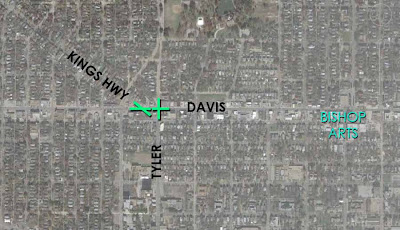
Yesterday, at the invite of Jason Roberts of multiple fames: Bike Friendly Oak Cliff, Build a Better Block Project, and band Happy Bullets, I was able to head down to X+ in Oak Cliff and check out their "citizen's arrest" of an untamed public street. In this case, it was the quasi-guerilla conversion of Tyler Street into a "complete street" that has been getting some publicity in local media circles.

What is a complete street you ask? It is a street that dedicates equal priority to various forms of transportation (or the opposite of) within the right-of-way (or building face to building face). This might include just vehicular travel, parking, sidewalk, and outdoor seating. In busier locations, it could also include various forms of transit such as dedicated bus or other mass transit lines. The purpose is to regain the necessary safety for pedestrian life to occur by limiting the domination of spaces by car travel and the infrastructural design supporting dangerous speeds through places.

In action, the conversion of just one block of Tyler Street had a profound effect on safety (at least perceived), enjoyment, livability, AND commerce for the local businesses. Jason relayed to me that the local bookstore, Cliff Notes, had their best sales day ever on Saturday, the first day of the staged "complete street."

In conceptual terms, what Roberts and others did was to apply greater differentiation to the street hierarchy. In the traffic planning world, hierarchy is fairly simple. Each street generally gets one classification (arterial, connector, local, etc.) and that is that. The street is generally designed to be the exact same no matter the location or context. What this has done is effectively flip the natural order of things: where the most traffic is, the most density wants to be, and the most activity happens. Our street design was so car-oriented that the streets cutting through neighborhood centers such as this one became repellents rather than attractors; barriers to activity and economic development.

What occurred over the weekend at Tyler Street was the intuitive application of a second (and necessary) metric to street design hierarchy, that of Place. Using a two-dimensional tool for street design is a growing concept in both Australia and in Great Britain, places similarly afflicted by poor street design and transportation planning, but not to the extend here.
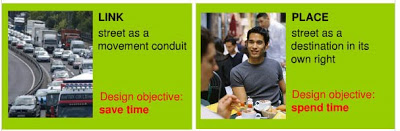

(graphic pulled from this presentation by Prof. Peter Jones)

I find it far more effective in appropriating design based on the dual purpose of streets which is the backbone of the report by the same name: Link and Place which details that public rights-of-way can be one or the other, or even both. If both is the goal then certain design elements are critical to allowing link and place to occur simultaneously considering efforts at "saving time" can often be in conflict with the desire to "spend time."

Because the transformation of Tyler Street occurred only on one block the contrast between street as Link and street as Place was striking. See for example this picture looking south along Tyler where the Street remained untouched:


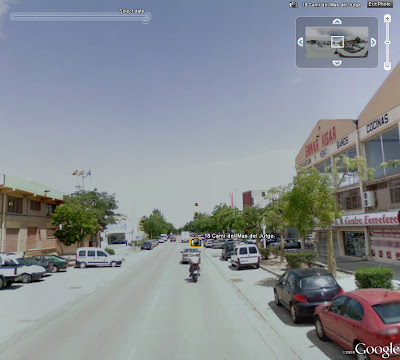
Wide. Narrow, inconsistent sidewalks. No parking except off-street. It isn't a stretch of the imagination for you to take my word for it that these cars were driving in excess of 45 mph despite their static pose for this shot. We know that speed regulation and enforcement is an utter failure of policy and expenditure of resources. Cars and their operators will only drive as safe as the conditions and design of the street allow them to feel comfortable to do so.

So what happened when these cars hit something out of the ordinary?


Break lights.


Are those break lights? Sure look like it.


Let's look closer at the third car... yep, those are break lights. In fact, the cars would drive so slowly through the "Better Block" that people felt comfortable enough to "jaywalk" and even blindly cross the street without even looking for oncoming traffic. That's a safe street. The environment ensured it. This delay of possibly an extra 15 seconds of each driver's life was reacted to not with rage but more often of admiration and amazement. One overheard comment, "I wish my street was like this."


People of all ages showed up to socialize, people watch, and "spend time," representative of "slow" living that allows us to take time and enjoy life and the company of others, differentiating us as humans from the assembly line logic of traffic planning.


Above: yes, that is a set of turntables on a mounted rig on a bike. Below, adding to the ambience of urbanism, the sensory experience whether it was tastes from the Brownies in a Jar from around the corner, or the sounds of bongos played on the sidewalk, or the smells emanating from the coffee shop, the complete street fostered a participatory environment where businesses, residents, and visitors all took part, whether as performer or passive observer. All enjoyed experiencing the life so missing from so many parts of the City. All prevented by written policy. This was Jason Roberts' point.


Above: the painted bike lane with on-street parking at such a distance to avoid conflict between door openings and bike traffic.


One interesting lesson was that the street had been so effectively narrowed that the bike lane in effect was merely a rhetorical prop, much like the traffic lights. The kid in the above photo felt fully comfortable riding in circles on the street, as did his parents nearby. However, it should be pointed out that the bike lane would increase in efficacy as it lengthens and extends further along the street defining the place for bike traffic as a street morphs in various forms or design sections based on its place within the Link/Place matrix.


It has yet to be listed or defined as a livability indicator, but the presence of bicycles clearly is one that relates to Babies! or AYFs. It is one that is predicated upon safety. At Tyler Street yesterday (and presumably the day before) there were strollers and bicycles a plenty.

Once safety, lowest on the Maslow Hierarchy of Needs, is achieved (when cars, the most deadly of transportation modes, no longer have priority of space) only then can culture be meaningfully introduced. With the right urbanity, the right platform, it occurs naturally through citizen created vitality. Art and Music were both present in a place we could call a real arts district, where more people (and culture) were on each day of the weekend than the named Arts District (which illuminates the challenge of the Dallas Arts District).

This can't just happen anywhere however. As I pointed out to Jason yesterday, these will be most successful in the areas where it is most inconvenient, areas with the most convergence, which naturally form the centers of neighborhoods.

[The sound you just heard was not another stadium implosion, but the brains of ten traffic engineers exploding as their world, their belief system is no longer valid. Their bibles for how to move cars are instantly irrelevant.]

Neighborhoods throughout the city deserve similar experiences, places to go that are within walking distance and spend an afternoon cheap on the wallet but valuable to the soul, with family and old friends, or new ones (hopefully just friends, but for the single folk, perhaps make new families too. Walkable DFW does not sanction polygamy.). However, the transportation system deters this from happening. In our attempt to allow for the most amount of traffic through our neighborhood centers, we eliminated the ability to have the most amount of traffic (foot traffic), and in turn, do the most business.

Will these compete with malls or power centers in terms of sales receipts? No, but neighborhood scaled activity hubs are central to our every day lives. This is real economic development that doesn't take the nonsensical public spending on highways, but rather by eliminating the barriers to real urbanism is what economic development should be all about. As I have said before, intra-city commerce can occur in any form, it is up to us to determine the right transportation network to build and foster the formats which we would prefer.

What the Tyler Complete Street represents:
  1. Citizens taking their streets back. They've paid for them, and are unhappy with the way their streets have been mismanaged and designed in a way that hinders quality of life.
  2. Street behavioralism at work - and its interrelated connection with "place" creation.
  3. And relatedly, the utter failure of traffic and transportation policies and how they relate with city form and urban design.
The last part is the scariest. It gives the most credence to the growing notion that centralized planning is defunct. In some ways it is, but only in the way Frank Gehry and others understand the 20th century version of planning. To say all public/government led planning is failed and that this version is the only ideal version is also false. As I've said before, it is about eliminating the barriers to both economic and community development. In most cases, this means undoing the "planning" of the 20th century: the highway and arterial system.

See New York City where Transportation Commissioner Janette Sadik-Khan is transforming that City with some paint and jersey barriers, redefining the public realm to prioritize pedestrian activity rather than vehicular movement. It is the difference between buying a potted plant and actual gardening. It is about creating the platform, fostering and tending to places to encourage vibrancy rather than attempting to bestow it. And the public sector has the onus on removing the barriers by correcting its mistakes. It will be paid off in spades with a real "World Class City" rather than one that we so often incorrectly label as one.

In many ways, fostering urbanism is about letting go of control. Gardens and ecosystems don't grow optimally with over pruning. A world class city is one that people love. People loved what was happening at X+ yesterday and in Bishop Arts with the Arts Crawl. I know I loved it.

Monday, March 22, 2010

X+


One thing that has always bothered me about large-scale urban developments is the renaming aka rebranding of areas as if by Mickey's magic wand from Fantasia. Areas can't be named by marketese through exhaustive, expensive, (and useless) branding exercises without sounding overly generic, undermining its ability to catch on by achieving ownership of the name by the locals.

Some that have proven successful are often broad, encompassing and either tied to its place geographically (various uptowns, midtowns, etc.) or historically (ie meatpacking districts, etc). In that way, they contribute immediately to the sense of place and the viral nature of the conceptualization of a place within the hive mind of the populace. The culture immediately adopts it as something that makes sense and is attributable to the location and character of the place.

A school of thought exists that artists make the best pioneers into new areas. They are flexible with their needs and are looking for cheap space to colonize and work with and be around other creative types. By moving in and fixing up the rundown, they qualitatively improve an area enough to make it register as a target for possible investment area for developers, and further qualitative improvement.

Those creatives who have since colonized Bishop Arts, making it a location safe for more buttoned-up, risk averse, professional types to invest in homes in areas with unique character, have since moved Westward apparently deeming Bishop Arts too passe now that the yuppies have graduated from uptown/West Village. This new emerging area is deemed by the locals as "X-Plus" or X+ for short.

Bottom-up naming and "place" creation like this has cache. It sticks.

Creatives are the worker bees in search of new honey patches for the colony. Some areas have better honey, better bones for long-term resilience, or neighborhood vitality.

From an urban form standpoint, X+ has many things working in its favor: decent nearby housing stock, interesting historic buildings worthy of stewardship and rebirth, and most critically convergence. The convergent form in this case is even the promethean force in the naming of the very place.

Less importantly, it has two things that are outcomes moreso than they are causes - new streetcar and an overall rezoning plan, but will nevertheless help to participate in the gentrification process inherent and inescapable as all places evolve from urban frontier to vibrant, funky and unique locales into staid, yuppie enclaves.

Don't fight it. Work with it. Nurture it and help shape it. The ever-migrating process is the revitalization of your City.

See more:


Wednesday, February 10, 2010

Myth and Necessity of Choice in the American Scene


The beauty of having a multi-screen setup for your home computer is that you can watch movies while you work. As a child of the internet, if itunes, a movie, four browser windows, photoshop, CAD, InDesign, and various folders aren't all open, some things just don't seem right with the world. I happened to have Hurt Locker on today, when this shot washed across screen #2. How serendipitous.

This post started as a tweet I made a month or two ago from the cereal aisle in a grocery store a few weeks back, which then turned into a series of tweets as I tangent tripped:
The myth of variety in the American marketplace. There may seem like a million kinds of cereal but they're all made of the same stuff

Myth of variety 2. There may seem like a million suburban tract homes. But they're also made of the same lousy stuff.

Myth of American marketplace 3. Those low costs where you think ur saving. U r paying for it thru all the costs that were "externalized"
Perhaps, choice is the preferred word than variety, because they are different but the choice is irrelevant. Housing choice is for the most part is the equivalent of cocoa puffs and fruity pebbles...all made of the same crap underneath: corn starch, artificial coloring, flavoring, and some bran flour. Flip the formula around a little bit and you get a two-car garage, a pool, and a third half-bathroom.

A house should always be first thought of as a home. It is first shelter, then a place of comfort. Unless you happen to catch a bubble at the right time, which is difficult especially when the power of positive thinking irrational exuberance kicks in housing, thinking of it as an investment is typically not a good idea. Despite what conventional wisdom might tell you. Conventional wisdom has a short memory...and it is often manipulated by the National Ass. of Realtors.

Housing costs are always pegged to income. There is always x amount of people in the world, y amount of housing units, and z amount of money. All of which are interrelated. When you start adding distance between housing and jobs, markets, etc you start raising the cost of that housing in an externalized fashion because of the energy exerted traversing those distances, over and over and over.

The noughties saw rising home values and falling incomes as we leveraged ourselves to the hilt. Cities will be contracting in the "great reset" of the unnecessary complexity that was once considered "modernity." The brand new house you just bought out in BFE, that you thought was a great value, could very well have as much value in twenty years as the nutritional value from those honey smacks.

It really was a steal...from you...and all of the taxpayers supporting the infrastructural costs that were externalized (onto you) perpetuating what you thought the American dream is.

In fact, the only way for housing to be "sustainable" or a valuable investment beyond a shelter is for one generation to pass it on to another free and clear allowing them to focus money and energy on other pursuits, like bettering themselves. THAT is the American dream. And for that to happen that home has to be in a location as well as designed and constructed in a way that is suitable (or at least adaptable) to those future generations.

The problem is that so many of the houses built in the last twenty years have a shelf life no longer than twenty more years under the ruse of the NAR that is their simulated version of the "American Dream." Considering that suburban housing really didn't become prevalent until the Serviceman's Readjustment Act for returning soldiers in 1944 and the National Highway Investment act of 1956 did suburban housing really explode, building off of the various Levittowns and Americanized Garden Cities. Somehow I think the American Revolution, the Civil War, and either World War were fought for suburbia.

Point is, that if the American Dream is older than suburbia, how can suburbia be the definition of what the American Dream is? The short answer is that it, of course, is not.

Many of the negative comments in the various media outlets that have recently begun to pick up articles from this here blog, typically all come from the same angle: that in some way I'm trying to force them to live the way that I do when I'm merely offering the eulogy for the trivial things that they apparently hold so dear. What this is called, is transference. These are people that want everybody to live their way, where I'm suggesting that choice is necessary.

I blog here because I am showing how difficult (yet possible) it is to live the way of my choice. I blog because of the antiquated zoning regulations, highway funding, and state and federal street standards that force a suburbanized way of life and mandated car ownership onto all of its citizens. As Chris Leinberger has shown, the facts support me.

Suburbia offered an escape from the poverty, despair, and particularly the pollution and soot of industrialized cities. Highways were built as a conduit for people in and out of cities under the illusion that your own house and car were symbols of prosperity. Furthermore, highways became a centripetal force themselves - scattering people across the countryside into was is the anti-city.

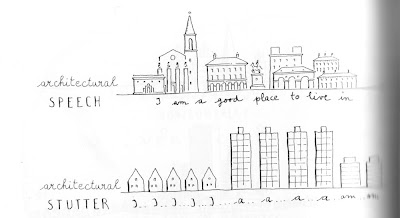
Sketch by Leon Krier

The illusion of choice in the market dictating a suburban world is as innaccurate as the misunderstanding of the American dream, and libertarianism for that matter. The cities we've constructed has created a homogenous world that forces elderly and children to be at the mercy of the car, whereas in more walkable communities all are empowered.

My interpretation of the American Dream is one of opportunity. Opportunity requires choice, as does a functioning market economy. The housing market has and will continue to fail as long as we build housing as "product," not livable, walkable places. Livable, walkable places allow for all to participate in community and the economy.

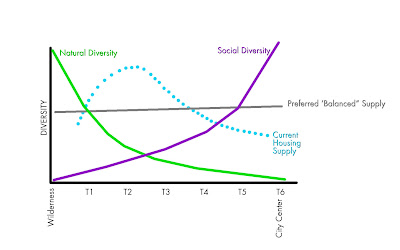
The tool typically used to show a greater range in housing choice is the transect. As I've crudely shown on the diagram above, the blue dotted line represents a rough estimation of housing supply. I've often written about Valencia, Spain as it is constructed in a way that is transferrable from one generation to another, thereby instilling value for future generations. We on the other hand will be completely reconstructing and reorganizing our cities.

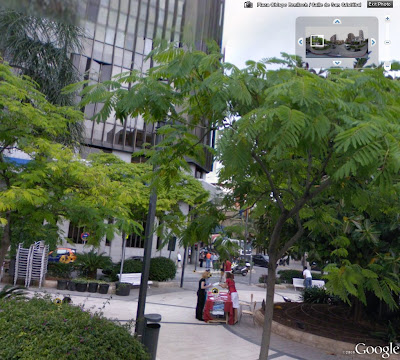
A quick tour to show the transect as it fully built out well before the idea was even codified (or given name for that matter) as it emerged by creating variety, only allowed by a robust and flexible transportation network.


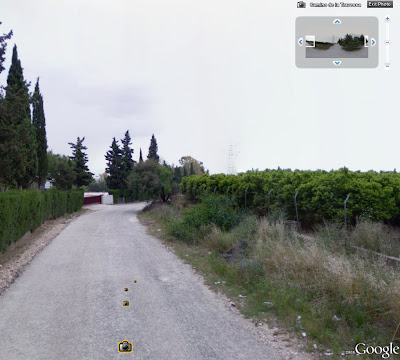
Nearby agriculture.


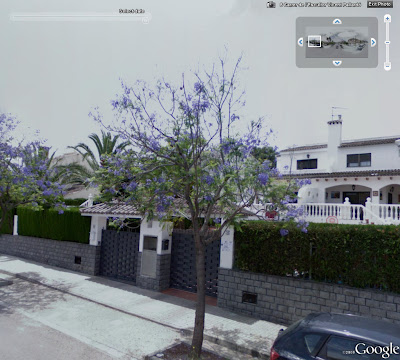
Want to live in a mansion? If you can afford it, they're back there.


Small lot, single-family housing.


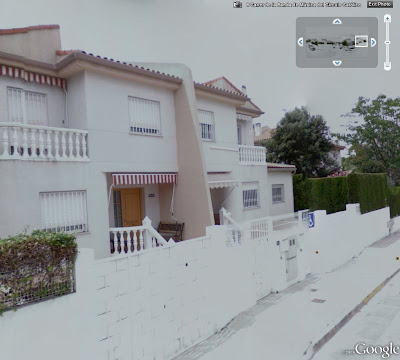
Attached housing.


Multi-family.


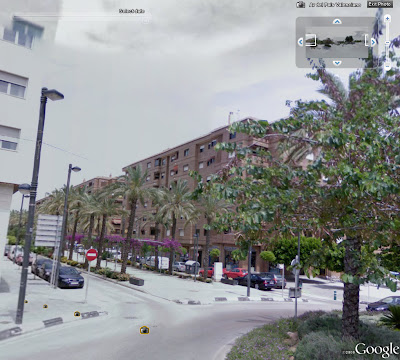
Want more action, try the City Center.

Except, this isn't Valencia. HaHA! I pulled a fast one like I was a realtor.

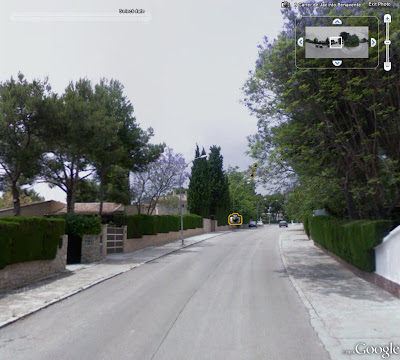
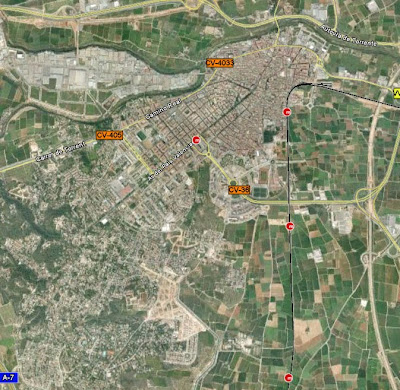
This is actually a suburb of Valencia called Torrent, which is home to 78,000 people. Below you can see it's form with minimal highway intrusion. The urban core is near the metro station to the Northeast. The rest of the community extends to the Southwest as density diminishes. The industrial area is the peninsula like form between a waterway and the highway to the North. In other similar suburban Valencia communities, the railroad is usually the demarcating line between the living area and the industrial zone, station serving as the dissemination point for goods and people.


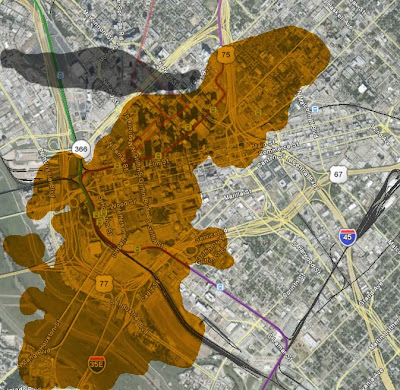
Below is the same 78,000 person community applied at the same scale to Downtown Dallas, if to only show how efficiently the land is used, while providing all of the housing choices shown above, and designed in a people-friendly manner.


The gray represents the industrial zone, what is typically known in the states as LULUs, or locally undesireable land use. Ya know, much like freeways are, except these are even designed for people:


And one going away shot of one of the central squares. Notice the divided bike lane:


In order to survive, our suburban municipalities, are going to have to prove their worth for future generations. Nearly all will be unable to continue functioning solely as bedroom communities and will have to look to places like Torrent for how to redesign their communities; to densify, to be usable, functional, productive, and livable in the 21st century.

If our economy is to get off the ground again, we must focus efforts on the provision of choice, in transportation, housing, and places. A polychromatic variety of experiences and densities (designed livably) creates for, in essence, competition, thus allowing for positive feedback and better, more productive places.

All "stimulus" efforts should be focused on building livable (and walkable) cities allowing for choice in housing and transportation, not only for the few, but for all. Choice, it is the foundation of the American Dream and a prosperous economy.

Monday, December 7, 2009

The Life Raft

CoolTown Studios has an excellent post up describe the critical components of what many of our cities need, sun belt cities primarily, in the worst way.
Local, independent businesses on the ground floor. Not only do local businesses have four times the economic impact over nationals, but the entrepreneurs who run them are a key source for job growth. The ideal business in this building would be a third place restaurant/cafe/coffeehouse/lounge.
I've described something similar at this post:
we are working to develop a multi-family prototype geared to the needs of Millennials. It generally consists of smaller units, but more embellished common areas and amenities to accommodate their highly social nature and attract talented college graduates to Dallas.

A focus on urban infill housing and creating a more livable city will provide the foundation for getting out of this rut. The will is there, even if it is subcutaneous, but we also need leadership to guide us there through the darkness.

Tuesday, April 14, 2009

Chicken Nuggets

Arianna at HuffPuff: Lot of good news in banking...but the important part to extract and apply outside of banking:
Unlike the big banks, credit unions are not owned by shareholders, who are looking for maximum quarterly profits, but by members, who are looking for stability and service. Since their goal is not to maximize short-term profit, credit unions by and large steered clear of risky subprime loans. As a result, their balance sheets could pass the Geithner stress test just fine.
Critical for a few reasons, 1) to bring into question the legitimacy and/or relevance of the modus operandi of publicly traded companies, 2) in the real estate industry this confirms my opinion to some extent that the scale of individual projects will be much smaller in the architecture and real estate industry based on lending ability of smaller banks (which is good) IF the redevelopment and rebirth of our cities is done as a series of many smaller projects leading to more regionalized, incremental, and if you will, fractal growth. And lastly, 3) how is this idea of long-term interest and cooperation applicable elsewhere?

Here is potentially one answer: Organic, Local Grocery Co-Ops.

Wednesday, March 11, 2009

Quote for the Day

When asked today, again, why I do not have a car, I responded with the weariness of answering with such self-aggrandizement; with self-righteousness. I sought the simplest answer and responded with:
"Because...[pause to allow the mind to discover the most simple yet perhaps most profound answer my facile brain has yet to]...because I don't want one."
The things you own, end up owning you. ~ Tyler Durden.

Monday, March 9, 2009

The Real Issue with Wall Street (and your 401K)


On HuffPuff, Ann Pettitfor writes about Wall Street holding the U.S. for ransom.

JHK suggests something similar regarding the "too big to fail" myth.

The "ahha" moment I had this weekend whilst walking the mutt on another warm but blustery Downtown Dallas day, was what Wall Street's deeper issue is, beyond the credit default swaps, the ARM loans, greed, etc. All of the companies on the DOW or S&P 500 are huge corporations. They can't physically or economically get any bigger, which is what Wall Street, investors, and your 401K demand, so in turn, they all need to, and are currently shrinking (my publicly traded company included - love those stock options!)

This is the problem with growth. It was touched upon on this week's Bill Maher show with guest Cory Booker. Except that nobody really put 2 and 2 together to realize that there are different types of growth. I have mentioned exhaustively qualitative over quantitative models of growth, but I also touched upon it here:
Let me be the first to say (with thoughts for the other side of this bottoming), that instead of saving dinosaurs, how about we start thinking about saving that money to help startups on the other side of this bottoming that will be smaller, nimble, and more able to meet the needs of the 21st century.
Harvard economist Howard Glaeser echoed my sentiment:
That is how innovation works: small companies competing like crazy and trying out new things. Across cities, there is a strong connection between an abundance of small firms and local growth. The last thing that the government should be doing is propping up big declining firms. Real innovations are far more likely to come from someone’s garage, which is where Chester Carlson came up with the Xerox machine during the Great Depression.
The advantage of Wall Street and Globalization (and I'm one to point out its failings as well) is to deliver capital to companies in need of it for their own growth and economic development for all of us. Nay, this is the POINT.

Instead, it has devolved into a guessing game of who is gonna buy out whom, who will report the best 4Q sales figures, or simply who is the best at hiding their illegal ponzi schemes. Another dinosaur, a construct built entirely to pick the horse that will be standing at the end when only the biggest corporate fish is left. What then? How will our 401K improve at that point?

Well, we're essentially there already. We know that in order to maintain "growth" figures, that these corporations can now only cut costs while trying to provide the same or similar product, which has had disastrous effects on the health of our economies and our physical health.

Wall Street to have a real purpose and contribute to the rebuilding of a real economy is to find a way to deliver the engine of capital that only they can provide to the innovators of the 21st century, the inventors, the biologists, the "green" technicians.

Only then will your 401K begin to shed its sickly sallow look.

Tuesday, March 3, 2009

Has Someone Been Reading My Blog

Doubtful, but Harvard prof. Howard Glaeser comes to the same conclusion as I did here:
That is how innovation works: small companies competing like crazy and trying out new things. Across cities, there is a strong connection between an abundance of small firms and local growth. The last thing that the government should be doing is propping up big declining firms. Real innovations are far more likely to come from someone’s garage, which is where Chester Carlson came up with the Xerox machine during the Great Depression.
My words:

Let me be the first to say, that instead of saving dinosaurs, how about we start thinking about saving that money to help startups on the other side of this bottoming that will be smaller, nimble, and more able to meet the needs of the 21st century.

It is time to fossilize the AIGs of the world and hang their bones in a museum. We'll dedicate it to decadence and an unrelenting belief system to the religion of greed. As I once heard somebody say, Greed makes for a useful agent in democratic free market economies, but also makes for a horrible master.

Monday, February 2, 2009

Stimulus for the New American Dream

An OpEd by Peter Calthorpe:

http://www.sfgate.com/cgi-bin/article.cgi?f=/c/a/2009/02/02/ED4C15KI1B.DTL

Preach on brother:
The real estate meltdown is more than a crisis of credit; it is a manifestation of what is not sustainable. In plain fact, suburban sprawl is out of sync with our most profound economic and environmental challenges. The penalty for developing such communities is the time, money and greenhouse gas emissions of too much time spent in cars and too much land consumed.

Wednesday, January 21, 2009

Investing in Rail Better Job Creation than Roads

From New America Media (link)

The relevent(s):
The figures make a lot of sense when you consider the difference in these endeavors: building new roads and expanding highways mostly involves paving over dirt, with some amount of construction of raised flyovers and interchanges. Extending a rail line means manufacturing the rail and the rail cars, then laying them, and after they are laid, on-going operation of the train. Similarly, new bus lines involve vehicle and parts manufacturing and long-term operations. Because most transit agencies also have Buy America policies, public transportation investment creates industry jobs in the United States, as well as construction jobs—on-going operating jobs are an added plus.

For individuals struggling to reduce their personal expenses in this affordability crisis, being able to rely on buses and trains can free up money that would otherwise be spent on a car. In the United States, transportation is the second highest household expense, after housing. But people who live in a neighborhood well served by public transportation are able to reduce their spending on transportation from 25 percent of their household budget to just 9 percent. The money they save can go to ensuring that they pay their mortgage or rent on time or these dollars can go back into the economy through purchasing goods and services.
Let's examine how much I save in transportation costs since loosing myself from the vexing finger-cuffs at the hands of Toyota, shall we:

What I would spend per month if nothing in my current living situation were to change and I were to add a new shiny smoke gray auto to my family. Meaning, still living and working downtown; keeping most of my cavorting and social gallivanting contained within loop 12. I'll also assume that toll fares and parking meters work out to be negligible.

Oh, and I would be purchasing this car.


Cost .............................................................$$/mo.
Buying/Leasing a new car..........................................300
Down Payment prorated over 12 months.........................200
Insurance...............................................................150
Parking (at Interurban Building)..............................120 (wtf?!)
Gas (at the rate I used to of 1 fill-up/mo.).....................40

Airport parking (private travel)......................................15
~Taxes, Tags, & Fees...................................................30


TOTAL..............................................$855/mo
or $10,260 in the first year of ownership

Expense sans Auto.........................................$/mo.
Monthly DART pass (assuming I had one)....................50
~ Cab Fees (entertainment purposes).........................30
Non-expensed airport cabfare (ie not for work)...........15
Occasional rental car use & gas (prorated).................35


TOTAL..............................................$130/mo
or $1,560 for the next year


Except that I don't ride DART enough currently to warrant a monthly pass so let's knock those numbers down to more accurate levels:

TOTAL..............................................$90/mo
or $1,080 for the year

Now, it could be argued that I pay a premium to live downtown. I would guess that number is about $0.30/sq.ft. per month equating to an additional $210/mo. premium for walkability or an extra $2520/yr.

So that is a mobility cost of $3,600 (current state) vs. $10,260 via car ownership, meaning that I'm saving (or just spending in other ways) $6,660 per year.

For comparison, the article referenced a savings of 64% on transportation. Mine came out to 64.92%.