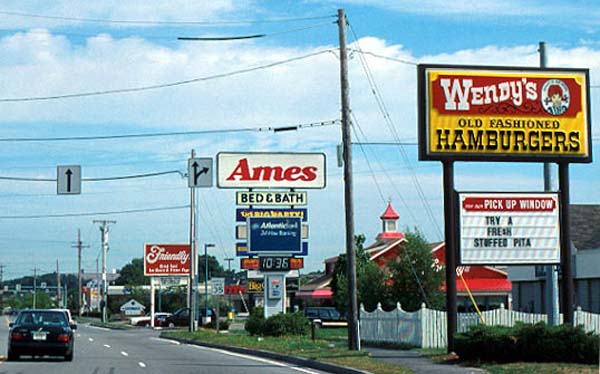
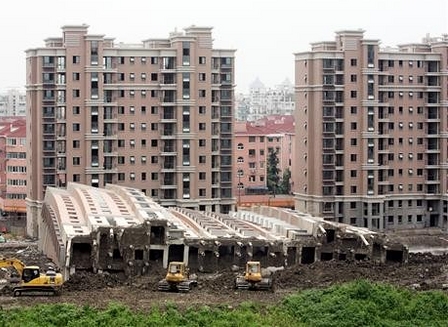
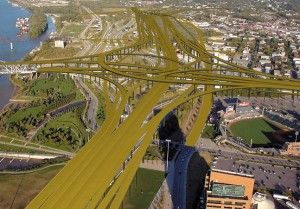
Showing posts with label Engineering Dystopia. Show all posts

Monday, December 6, 2010

Conversing w/ a Traffic Engineer

"We can't have obstacles in the clear zone."

"What is the clear zone?"

"A zone that must be clear of obstacles on either side of the street so that cars don't run off the street and hit anything."

"How wide is this clear zone?"

"Twenty-five feet."

"That is my entire front yard. My kids play in the yard."

"I would not recommend that."


"What is the total project cost?"

"The project cost is $9 million."

- from Chuck Marohn at StrongTowns.org

Monday, November 22, 2010

Confessions of a Traffic Engineer

In Dark Age Ahead, Jane Jacobs decreed what she saw as a foreboding pattern evident in the onrush of all dark ages. One of those criteria, she described as credentialism over education, ie the rush to add professional seeming letters after your name even though most of those are positioned as barriers to defend the profession, not from others as much as progress. It enables a stultification of innovation.

In this post at Strong Towns blog, a traffic engineer repents:
We go to enormous expense to save ourselves small increments of driving time. This would be delusional in and of itself if it were not also making our roads and streets much less safe.
He touches on the differing priorities between public and 'father-knows-best' traffic engineers, but what is most important is the statement above. We spend hundreds of millions to save a minute or two.

The irony of which is that the savings themselves are fleeting, as it has been proven that new road capacity only leads to temporary traffic reduction. And then we spend more money to get that ever-elusive minute back to our morning commute.

Next thing you know, you're living 40 miles from where you work, stuck on a "high-five" spaghetti junction that most likely cost the entire state its education budget in an assembly line of nameless, faceless others, suspended hundreds of feet in the air by a concrete superstructure, but at least it has super sweet stars painted onto it to remind you that you are, in fact, still in Texas.

Want to know why cities, states, and the federal government is broke and the public mired in excessive debt? Listen to a traffic engineer talk about "road improvement."

Friday, July 9, 2010

So THAT is Why Jane Lived for So Long

A recent published report getting a lot of play in scientific circles is about recent studies showing that highly stimulating, interesting, social environments reduces the incidents of cancer in mice.

Animal lovers proceed at your own risk:
Mice raised in a complex environment providing social interactions, opportunities to learn and increased physical activity are less likely to get cancer, and better at fighting it when they do, a new study suggests. A mild boost in stress hormones seems to be what keeps the cancer at bay by switching on a molecular pathway that restrains tumour growth.

Researchers from the United States and New Zealand injected mice with melanoma cells — the deadliest form of skin cancer. After six weeks, mice raised in an enriched environment — extra-large cages housing 20 individuals with running wheels and other toys — had tumours that were almost 80% smaller than those in mice raised in standard housing — five animals to a cage with no additional stimulation.
Once finished with their studies, each of the scientists removed their lab coats, grabbed their keys, found and started their Excursions in the amply provided parking area, and drove home to Shady Acres gated community.

I made that part up.

Rats in a cage, we are. Time to start burrowing an escape route.

But this does point to an interesting lesson. Jane Jacobs instinctively understood the importance of complexity in cities and the critical nature in confronting the nerve gas of modernist planning and engineering. That highly engineered solutions, aka those arrived at during the industrial and post-industrial eras, were perfectly fine for erecting buildings, bridging streams, constructing aqueducts, but they should not and must not interfere with the complexity of social structures, cities.

In many ways, Jacobs was Janine Benyus before Janine Benyus was Janine Benyus, just with regard to human civilization and habitat.

Driving highways through the middle of highly evolved, complex cities is the equivalent of trying to fly with birds like this:

http://habercininyeri.files.wordpress.com/2008/05/flugtag1.jpg

I've said for years that the 21st century will be the biological century and that there is far more to learn from natural sciences with regard to cities than anything modern planners, engineers, and architects could ever theorize or imagine.

In other news, we get a mindless ranking of top 100 "green" architecture firms that reads more like 'last surviving architecture firms' or those having not been fully wiped out by global economic repurposing. None of the top 10+ really do any kind of planning or understand the intricacies of buildings within their neighborhoods, with the exception of AECom which has swallowed up every planning, landscape, and engineering company they can get their hands on. Truly green indeed.

On the other hand, here is the neighborhood Jacobs lived in for many years and wrote about during Life and Death:
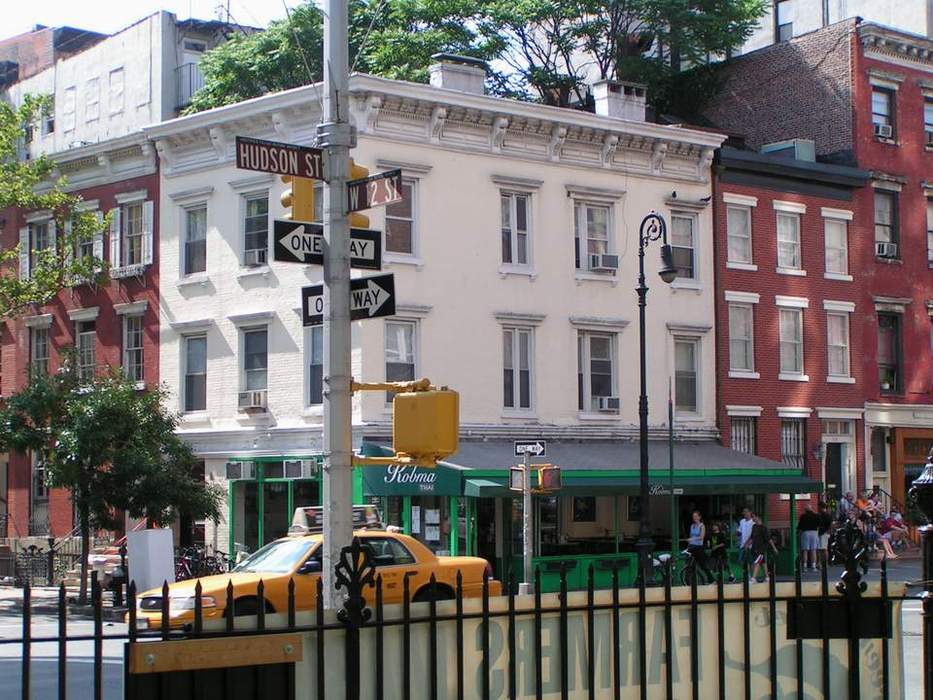


http://www.cyburbia.org/gallery/data/6514/jane_jacobs_neighborhood_00.jpg

And here is the city as logically defined by the assembly line, what we have successfully replaced complexity, vitality, and interconnectivity with in many cases, Dallas included:
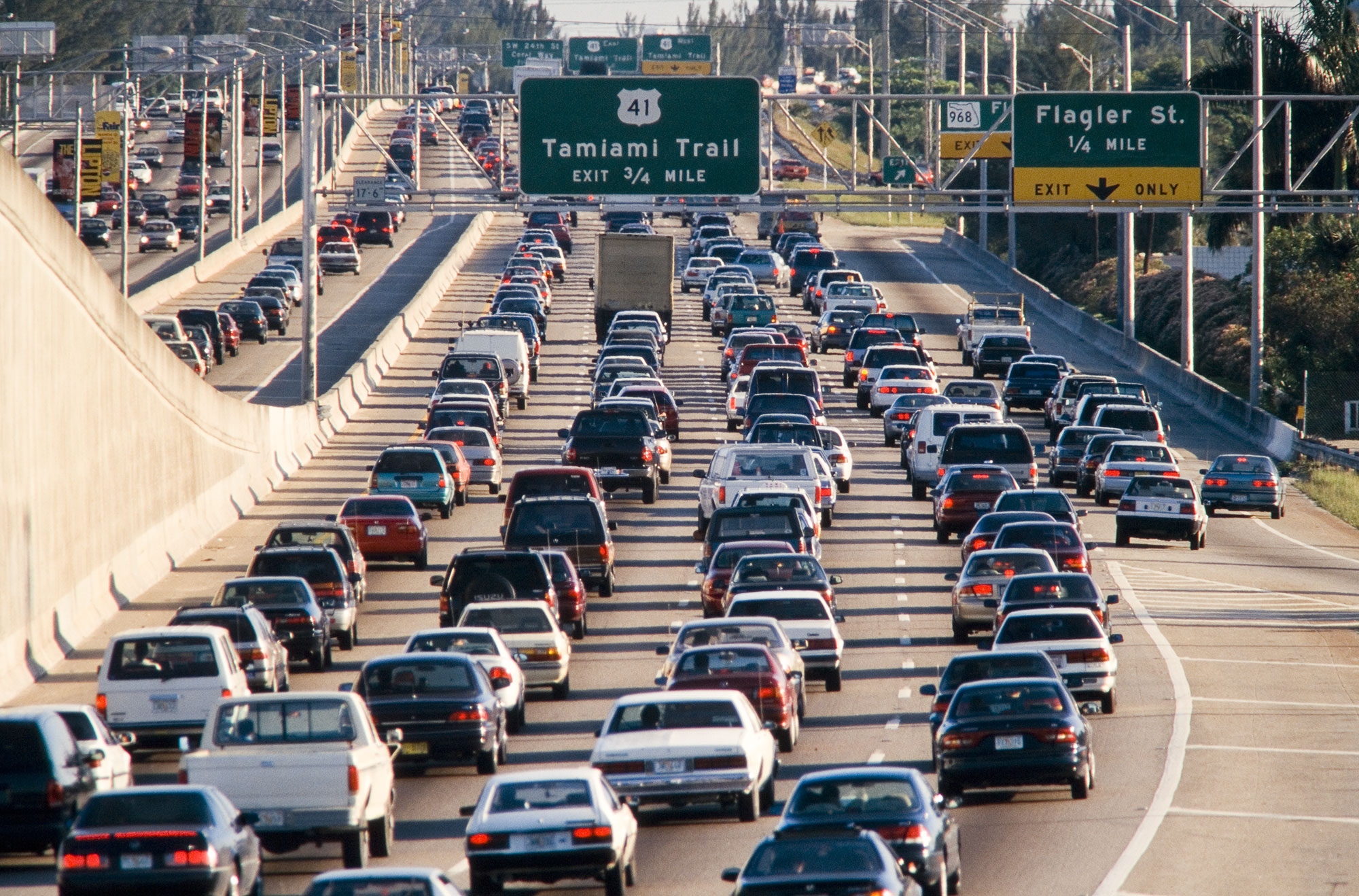
http://suburbanprepper.files.wordpress.com/2009/08/27862-hi-traffic1.jpg

Up on the conveyor belt, every morning, noon, and night:
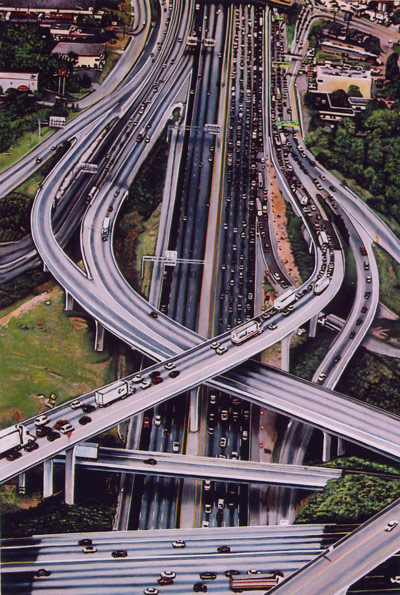
http://iwassaying.net/wp-content/uploads/2009/11/highway.jpg

http://www.dkolb.org/sprawlingplaces/images/fullsize/spr.strip.pei.jpg

And this one is in Texas. Gotta make that median nice and wide so we can expand lanes. And fill'er with rocks cuz ain't nobody gonna go in there.
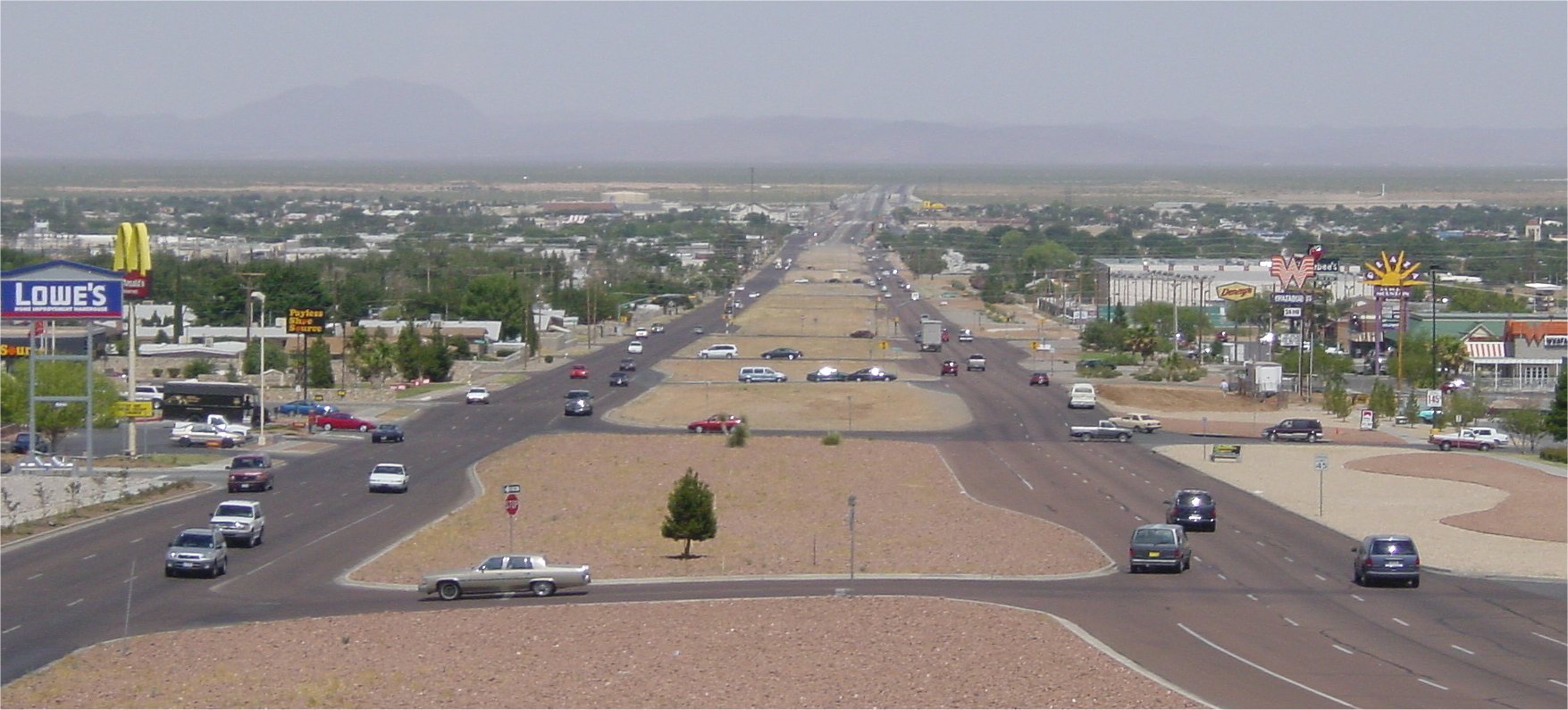
http://www.texasfreeway.com/elpaso/photos/lp375/images/lp375_looking_e_from_us54_31-may-2001_hres.jpg


http://onemansblog.com/wp-content/uploads/2007/09/Billboard_McDonalds_Obesity.jpg

And since we included the link to top 100 "green" firms, let's be sure not to leave those who draw up the deserts of the mind and body.


Enjoy your cancer. At least it will lead to growth in the health care industry...so we have that going for us. Yay GDP!

Monday, June 29, 2009

The Ends of a Means

What happens when one country crosses the tape first in the global race to the bottom. One can only wonder how many other disasters await out there thru corner cutting...


Link from WSJ.

Monday, April 13, 2009

The Battle Against Empiricism

In my CNU-NTX summary of the Duany presentation, I quoted him in reference to Civil Engineers and their quest for the perfect Level of Service A street:
"Under what theology does this work?! Where is the empirical evidence that these street designs make for a better place."
Well, there is a similar battle in the architecture field as well. I thought I might cross-post Michael Mehaffy's email to the Professional Urbanist Listserv, where he significantly expands on my riff against tall buildings (well, not so much against, but more as a voice of moderation to the hyper-density crowd -- I'm merely against them as the ONLY solution) to a broader discussion pointing out the obvious flaws (sometimes fatal) in "green" modernism.

Here he is referencing a paper he submitted to a symposium for classicism and sustainability at Notre Dame, and it is quite good:

  • Large smooth surfaces. These expanses do not age well over time; small dents and accumulations of dirt detract significantly from the pristine aesthetic at birth. At worst, such structures can become blighted and obsolete, and may have to be torn down prematurely. At best they require frequent, costly and energy-consuming maintenance. Presented to the public realm, they can be exceedingly anti-urban, and disruptive of the pedestrian realm.
  • Long unbroken lines, angles and joints. Again, these do not age well and slight imperfections over time show up disproportionately, requiring excessive maintenance and repair -- or, just as bad, suffer a decline in perceived value and appeal. That is clearly not a desirable occurrence when one is seeking sustainability over time. Another potential problem is that the high typical tolerances can be very expensive to produce accurately. A feature that was originally intended to reduce costs (minimalism) can in fact have the opposite effect.
  • Glass curtain walls. Even with the most energy-efficient assemblies, the insulation value of these is a fraction of solid assemblies.
  • Large-scale, deep-plan buildings. These limit daylight and natural ventilation, sever connections with the outside, and disrupt urban connectivity.
  • Large-scale sculptural objects. One key problem is that such structures are difficult to modify and adapt to new uses. This means that obsolescence is more likely if conditions or fashions change not a very ideal strategy if one is seeking resilience and sustainability.
  • Tall buildings. Not exclusively a modernist type, but certainly embraced by modernism, they have a number of serious drawbacks: high exposure of exteriors to sun and wind, high ratio of exteriors to common interior walls, tendency to promote heat island effects (which increases cooling demands), inefficient floorplates due to egress requirements, excessive shading of adjacent buildings, undesirable wind effects at ground, high embodied energy in construction, and expensive, high-energy maintenance. Tall residential buildings have also been criticized on social grounds as forming, in effect, vertical gated communities isolated pods that do little to activate the street or energize the larger urban network. While they can provide helpful density, there are more efficient low-rise forms that can deliver suitable densities too.
  • Reinforced concrete structures; steel frame structures. Both concrete and steel have high embodied energy and high associated carbon emissions from manufacture. The more exotic modernist structures very tall buildings, very large cantilevers, complex shell structures and the like have a proportionately high reliance on these high-energy materials.
  • Limited morphologies of repetition, abstraction, uniformity, and the large scale. Recent cognitive studies have shown that the minimalist form language of modernism, while of interest to other architects and making for dramatic photos in magazines, can be annoying or even stressful to ordinary people going about their daily activities. More research is needed in this area, but there is enough evidence to warrant a much more precautionary approach.
There is also the inherent problem of a continuous tabula-rasa, experimentalist approach, as a sound basis of producing robust and enduring designs - rather like

And I discussed the following advantageous features of what may be called "the traditional family of forms and types:"

  • Exteriors with articulation, detail and ornament. These features can hide dirt and wear, and actually improve in appearance with time. They also seem to make important contributions to pedestrian scale and interest, which is necessary if we want to create a functional pedestrian environment and a healthy public realm.
  • Complex relation of interior and exterior. The oft-maligned front porch and picket fence actually play sophisticated roles in creating connective layers of private and public, a kind of membrane system spanning between the innermost private spaces of a building, and the most public realms outside. The same is true for galleries, arcades, stoops, colonnades, balconies and other traditional types.
  • Focus of the building on its public realm. Most buildings prior to 1920 paid close attention to the way they addressed the public realm, with legible entries and ornamental details addressing urban space. These strengthened the relation of the building to its urban context, and strengthened the pedestrian realm around the building a critical need for a low-carbon neighborhood.
  • Punched windows. As many have noted, such assemblies reduce the amount of glazing and make it easier to achieve an energy-efficient wall assembly.
  • Low-energy, locally adaptable materials. Often traditional buildings have used locally available materials that have not required extensive industrial processing. Wood, for example, was relatively easy to work, and served to capture carbon. Even brick was usually quarried from local clay sources, and fired nearby with relatively modest energy requirements. These materials also made repair and modification easy and efficient, resulting in resilient and long-lasting buildings.
  • Thermal mass. Many traditional typologies have used relatively thick wall sections, which allowed for efficient moderation of temperatures.
  • Biophilic geometries. This fascinating area of recent research seems to show that for optimum health, human beings need to experience the geometries of nature within their built environments on a daily basis. These include the obvious natural elements like plants, sun and fresh air. But they also seem to include geometries that are characteristic of biological structures, including fractal scales, hierarchical groupings, characteristic proportions, roughness and texture, an optimum mix of unity and variety, spatial layering, a sense of prospect and refuge, and related geometries. Intriguingly, many historic buildings demonstrated rich aggregates of these characteristics. There is reason to believe they may have played a role in the care these buildings received, and their durability their sustainability over time.

Monday, March 16, 2009

Bizzy Day

So more Monday Afternoon Links...

The Infrastructurist on the 7 Most Ridiculous Roads as part of the stimulus:

Check out number 1, Louisville's doozy in downtown...


TIME, on the big ideas of 2009: #2 Recycling the Suburbs.

These words look like they're directly from my mouth:
Not every suburb will make it. The fringes of a suburb like Riverside in Southern California, where housing prices have fallen more than 20% since the bust began, could be too diffuse to thrive in a future where density is no longer taboo. It'll be the older inner suburbs like Tysons Corner, Va., that will have the mass transit, public space and economic gravity to thrive postrecession. Though creative cities will grow more attractive for empty-nest -retirees and young graduates alike, we won't all be moving to New York.
As I have said many times, hard times will flush the chumps (unfortunately, the undertow is pulling a lot of good people down with it). In this case, Fast Company says that Urbanists are the big winners as sprawl's fatal flaws have indeed been, uh, fatal.
A study by the Metropolitan Institute at Virginia Tech predicts that by 2025 there will be as many as 22 million unwanted large-lot homes in suburban areas.

The suburb has been a costly experiment. Thirty-five percent of the nation's wealth has been invested in building a drivable suburban landscape, according to Christopher Leinberger, an urban planning professor at the University of Michigan and visiting fellow at the Brookings Institution. James Howard Kunstler, author of "The Geography of Nowhere," has been saying for years that we can no longer afford suburbs. "If Americans think they've been grifted by Goldman Sachs and Bernie Madoff, wait until they find out what a swindle the so-called 'American Dream' of suburban life turns out to be," he wrote on his blog this week.