


Sprawl was written into the DNA of its own creation, feeding and perpetuating itself. If you don't go in and perform surgery to all of the urban genotypic details from zoning, to lending, to transportation policies, etc. All of which were once in support of public opinion perhaps (although I would argue that we had no idea the monster it would create). Even if it were, it is no longer the dominant public opinion, as Ray LaHood refers to in his blog posting, "It's not my agenda, it is America's."An obscure detail, often communicated by Andres Duany, a founder of the Congress for the New Urbanism, is that low interest mortgages designed to avert a depression at the end of World War II, did not include renovations of existing house stock. A viral response to that federal mortgage incentive program became all new residential subdivisions and in-town neighborhoods, which has experienced two decades of deferred maintenance, were left behind.
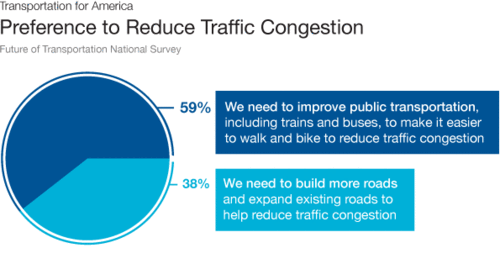
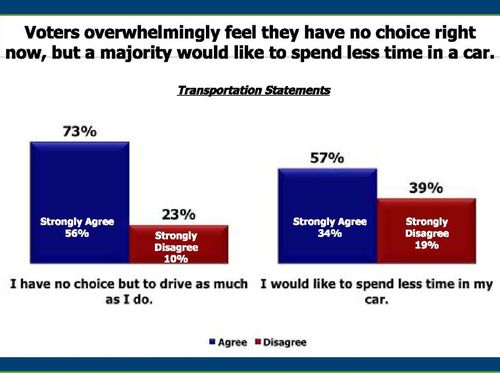
Public infrastructure, public policies, banking and mortgage incentives, public zoning and building codes public agency regulations and standards, and recently, Wall Street securitization standards, triggered viral market responses and conspired to create false demand for a product that is rarely the actual market preference.
Of course, this once again implies that since Kotkin's logic is so full of dung, that he is little more than the beetle feeding upon it.


 Posts
Posts


3 comments:
I find these types of revelations to be very interesting. People who would claim to be in favor of free markets and choice are really just proponents of the status quo. As such, they often seem to find themselves making an argument that defends companies, industries, and ways of life that have grown out of specifically identifiable pieces of government regulation and intervention in markets.
I find that this same phenomenon comes up when talking about the food and healthcare industries as well.
"As such, they often seem to find themselves making an argument that defends companies, industries, and ways of life that have grown out of specifically identifiable pieces of government regulation and intervention in markets."
I couldn't have said it any better myself. I call these people who obfuscate truth and fact for their own selfish purposes, which is really just fear of change, "status quo defenders." History is not kind to them.
In the past, I have also said that being "pro-business" is another way of defending the status quo, because businesses are specifically evolved to the policies that created the status quo. In this particular case, the trick is convincing businesses that progress towards livability and walkability is in their favor. For one, more efficient city layout/transportation would lighten the tax burden that businesses carry within cities. Further, more livable/walkable cities are easier to recruit and retain talent.
This might even argue in favor of increased adaptability for businesses. Perhaps that is why this country once had sunset provisions on incorporated businesses. They performed their task then they were shut down. Certainly would keep us from propping up defunct businesses like Ford, GM, etc. Their infrastructure could be liquidated/repurposed to meet demand, such as with streetcars, etc. much the same way their plants were overhauled by the demands of war in WW2.
Post a Comment